Zelda's Unending Innovation: How Tears of the Kingdom Carries a 40-Year Legacy
The Legend of Zelda: Tears of the Kingdom is a singular achievement, yet it moves through the medium like a river that carves a new canyon while obeying the same gravitational pull that shaped every previous bend. Even as a direct sequel to Breath of the Wild, the game draws deeply from a franchise-wide tradition that its creators have long acknowledged: the relentless pursuit of reinvention. In a 2023 interview with the Dutch outlet RTL Nieuws, translated by Nintendo Everything, producer Eiji Aonuma recalled a moment when former Nintendo president Satoru Iwata exclaimed he “didn’t know this was possible” upon seeing Link leap from the 3DS screen in A Link Between Worlds. That reaction captures the spirit of a series that has spent nearly four decades turning technical curiosity into interactive wonder. By 2026, the conversation around Tears of the Kingdom has shifted from the immediate shock of its physics system to the long tail of player creativity it unleashed—and that legacy only reinforces how thoroughly the game belongs to the Zelda tradition.
A Tradition Forged in Risk
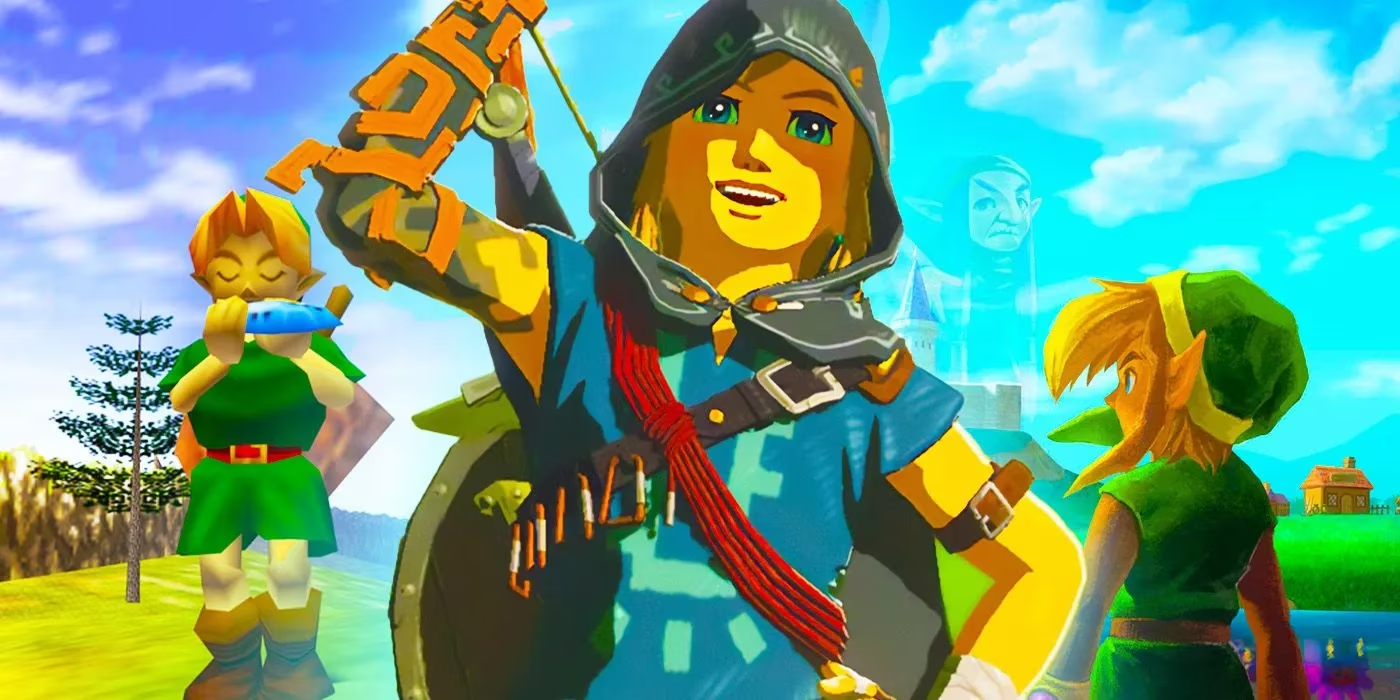
Zelda has never been a series content to polish the same mirror. From the very beginning, it treated innovation as a birthright rather than a bonus. The original 1986 game helped define the action-adventure genre with its top-down perspective, dungeon-crawling structure, and hidden treasures—elements that became a lingua franca for medieval fantasy games. Zelda II: The Adventure of Link then split the perspective between top-down and side-scrolling play, creating a kind of proto-3D experience that forced players to view the world from a single angle at a time. Link’s Awakening transported the hero to the dreamlike Koholint Island, proving that the series could abandon Hyrule and still feel unmistakably Zelda. Ocarina of Time brought the franchise into 3D with revolutionary lock-on targeting and spatial design, while Majora’s Mask introduced a time-loop system that remains a rare narrative and mechanical experiment—a Groundhog Day clockwork where every character follows a predetermined schedule until the moon resets the world.
The commitment to hardware-specific invention is equally telling. Phantom Hourglass on the Nintendo DS let players draw sea routes directly on the touchscreen; The Wind Waker had already pushed the GameCube toward a truly open ocean; A Link Between Worlds used stereoscopic 3D to make Link appear to jump out of the display; Twilight Princess and Skyward Sword turned the Wii Remote into a sword; and Breath of the Wild, followed by Tears of the Kingdom, leveraged the Switch’s rendering power to build a gorgeously simulated wilderness. Each entry is like a master origami artist folding a single sheet into an entirely new creature without a crease out of place—the material is familiar, but the result is unprecedented.
The Player as Co-Inventor
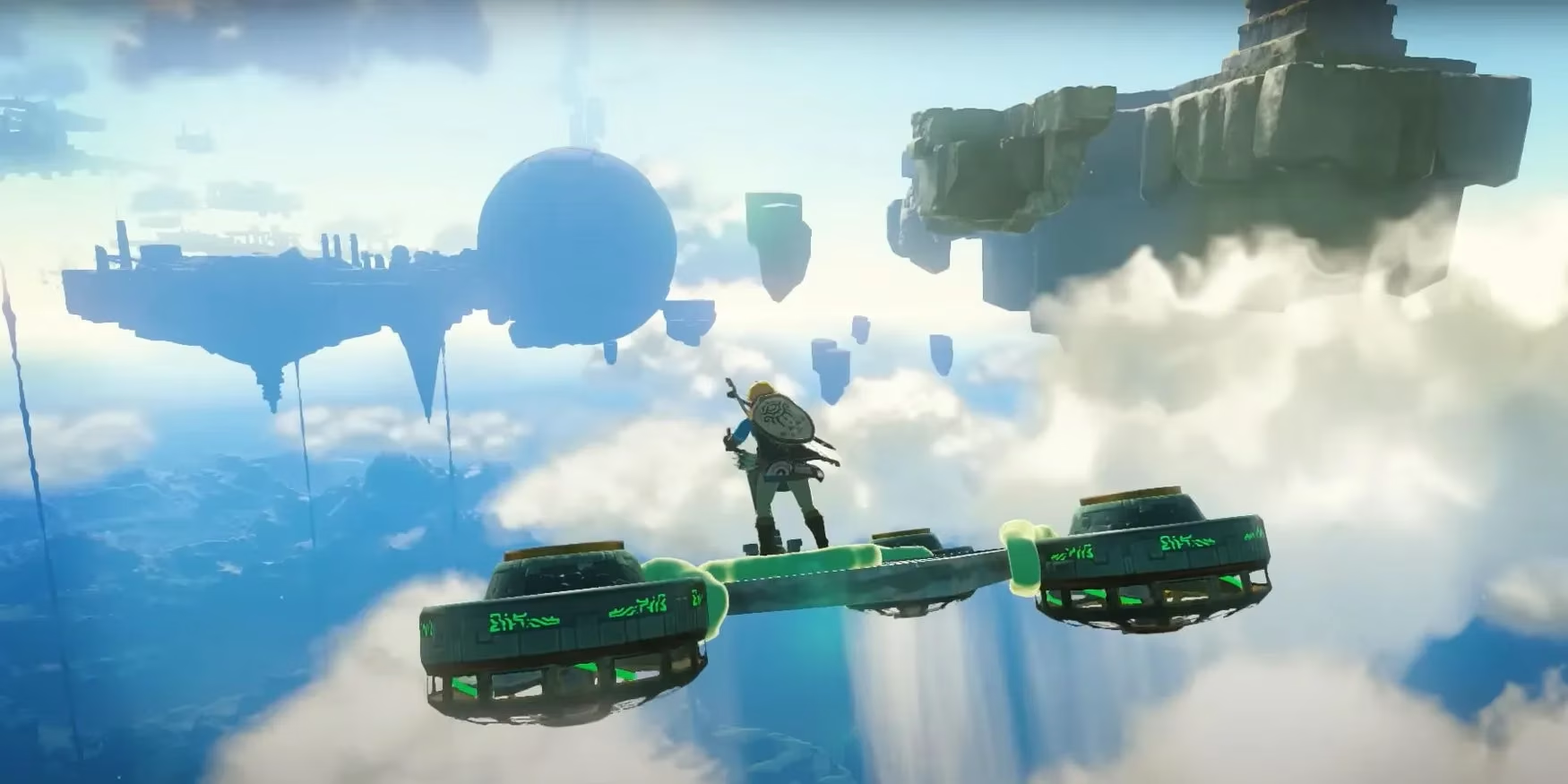
Tears of the Kingdom’s most radical departure is not a new item or a new map, but a transfer of creative authority. The Ultrahand building system and its accompanying physics engine allow players to fuse spare parts into improbable machines: mechanized weapons with whirring joints, unexpected puzzle solutions, and even contraptions that have become infamous for their treatment of Koroks and Beedle. For the first time in the series, the “I didn’t know this was possible” moment belongs to the player. Innovation is no longer the sole responsibility of the developer; it is a shared ritual. The system behaves like a mycelial web that quietly connects every seemingly isolated mushroom to the same subterranean logic—individual parts seem unrelated until a player discovers the hidden network of forces that binds them.
This shift does not diminish the developers’ originality. It extends it. By handing players a flexible physics sandbox, Tears of the Kingdom turns its own audience into co-authors of the series’ legacy. The game’s most memorable moments are often not scripted set pieces but emergent accidents: a bridge built from fallen debris, a flying machine assembled from fans and boards, a vehicle that shouldn’t work but does. Each one is a small proof that the Zelda tradition of innovation can be democratized without losing its sense of wonder.
No Outside Influences, Only Originality
In the same RTL Nieuws interview, Aonuma and Tears of the Kingdom director Hidemaro Fujibayashi addressed rumors that Elden Ring had influenced Breath of the Wild or that Tears of the Kingdom had in turn borrowed from FromSoftware’s open-world RPG. Fujibayashi stated he had not yet played Elden Ring, and Aonuma added, “I would never try to put the ideas of others in my game. I’m too proud for that.” The remark is not a dismissal of other games but a declaration of method: Zelda seeks to be the influencer, not the influenced. That pride has produced a franchise that other developers study, borrow from, and react to—often without realizing how deeply the series’ design language has seeped into their own work.
What Comes Next in 2026 and Beyond
As of 2026, Tears of the Kingdom has left two large pairs of shoes to fill. Nintendo has indicated that Breath of the Wild and Tears of the Kingdom will influence the standard format going forward, but whatever comes next must be just as cutting-edge to fit the series’ own reputation. A new DLC, a direct sequel, or a completely different game—each path carries the same expectation: that Zelda will continue to surprise. The franchise’s history reads like a shipwright who rebuilds the hull while the vessel is still sailing, never abandoning the voyage but never settling for a leaky plank.
| Era | Key Innovation | Legacy |
|---|---|---|
| 1986–1990s | Top-down adventure, side-scrolling hybrid | Defined action-adventure conventions |
| 1998–2000 | 3D lock-on, time-loop systems | Set standards for spatial design and narrative clocks |
| 2000s–2010s | Touchscreen sailing, stereoscopic 3D, motion controls | Matched mechanics to hardware identity |
| 2017–2023 | Open-air exploration, physics-driven building | Shifted innovation into the player’s hands |
Tears of the Kingdom is not an anomaly in the Zelda timeline; it is the latest expression of a tradition that treats reinvention as a duty. The series has survived and thrived because it refuses to stand still, and because it trusts its players to carry the torch of discovery. If the next Zelda game remembers that, it will find its own “I didn’t know this was possible” moment—and the tradition will continue.
Comments