Whispers of Hyrule: Finding Meaning in the Side Quests of Tears of the Kingdom
I stand here, in 2026, the memory of my adventures in Hyrule as vivid as yesterday. The sun-dappled waters of Zora's Domain still shimmer in my mind's eye, a testament to a world that feels less like a digital playground and more like a second home. My journey through The Legend of Zelda: Tears of the Kingdom was never just about the grand, earth-shattering clash with Ganondorf. No, the soul of Hyrule, its beating heart, was often found in the quiet moments—the side quests that wove stories of love, worry, and everyday life into the epic tapestry. They were the verses in a larger, more poetic ballad, and completing them felt less like checking off a list and more like truly living in this world.
The Path to Zora's Domain: A Prelude to Connection
Before the smaller stories could begin, there was the monumental task of calming the troubled waters. The "Regional Phenomena" questline was my ticket into each corner of Hyrule, and Zora's Domain was no exception. The quest "Sidon of the Zora" was a gauntlet, a series of trials that ultimately led me to the ethereal heights of the Water Temple. It was a main quest, non-negotiable, the kind of challenge that gets your adrenaline pumping. But here's the kicker—it was also a key. Only after cleansing the waters and restoring the Domain's luminous flow did the true character of the place reveal itself. The Zora stopped being mere quest-givers and became neighbors with their own worries and joys. The main quest opened the door, but the side quests invited me in for tea.
A Husband's Worry: The Quest Begins
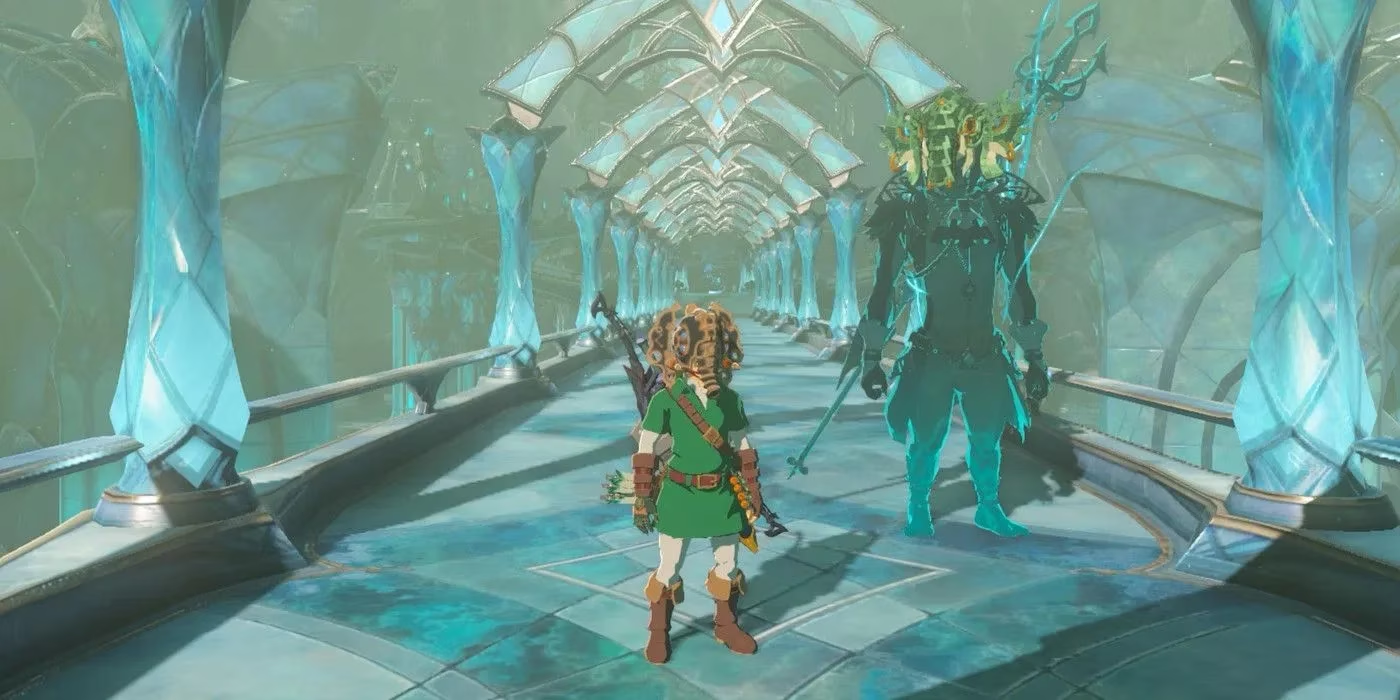
Walking the glistening main path into the town, I spotted him: Fronk. The poor guy was a picture of distress, muttering a name like a prayer—"Mei... Mei." Talking to him, I felt his anxiety. His wife, Mei, had gone fishing and hadn't returned. In a land where "strange events" had become the new normal since Ganondorf's return, a simple fishing trip was no simple matter. His request was personal, human. It wasn't about saving the world; it was about soothing a husband's heart. This, I realized, was where the game truly shone. It asked me, the legendary hero, to also be a good neighbor.
The Journey to Wellspring Island: A Leap of Faith
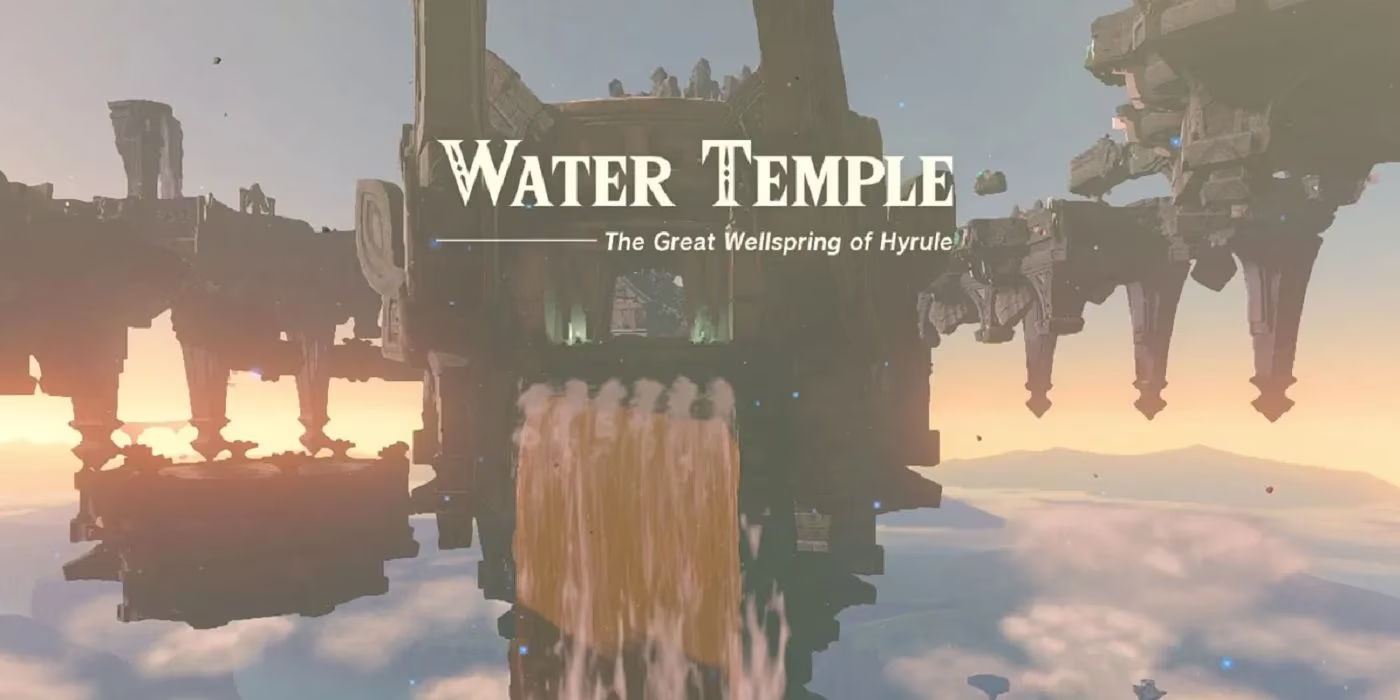
Finding Mei required a return to a place of recent triumph: the Water Temple. With the fast travel point active, it was a breeze—well, a controlled fall. From the temple's eastern edge, I took a leap, my paraglider catching the air as I descended to the picturesque Wellspring Island below. And there she was, Mei, focused on her line, trying to hook a Hearty Bass, blissfully unaware of the worry she'd caused. Delivering Fronk's message was a simple act, but her immediate decision to return home spoke volumes. The quest's mechanics were straightforward, but the emotional payoff was anything but. Returning to Fronk, seeing the relief wash over him, was its own reward. And the Hearty Fish Skewer he gave me? Chef's kiss. That item was a game-changer in tight spots, fully restoring my health and granting those precious temporary hearts. A tangible thank you for a sentimental deed.
Echoes of the Past: A Tale of Two Quests
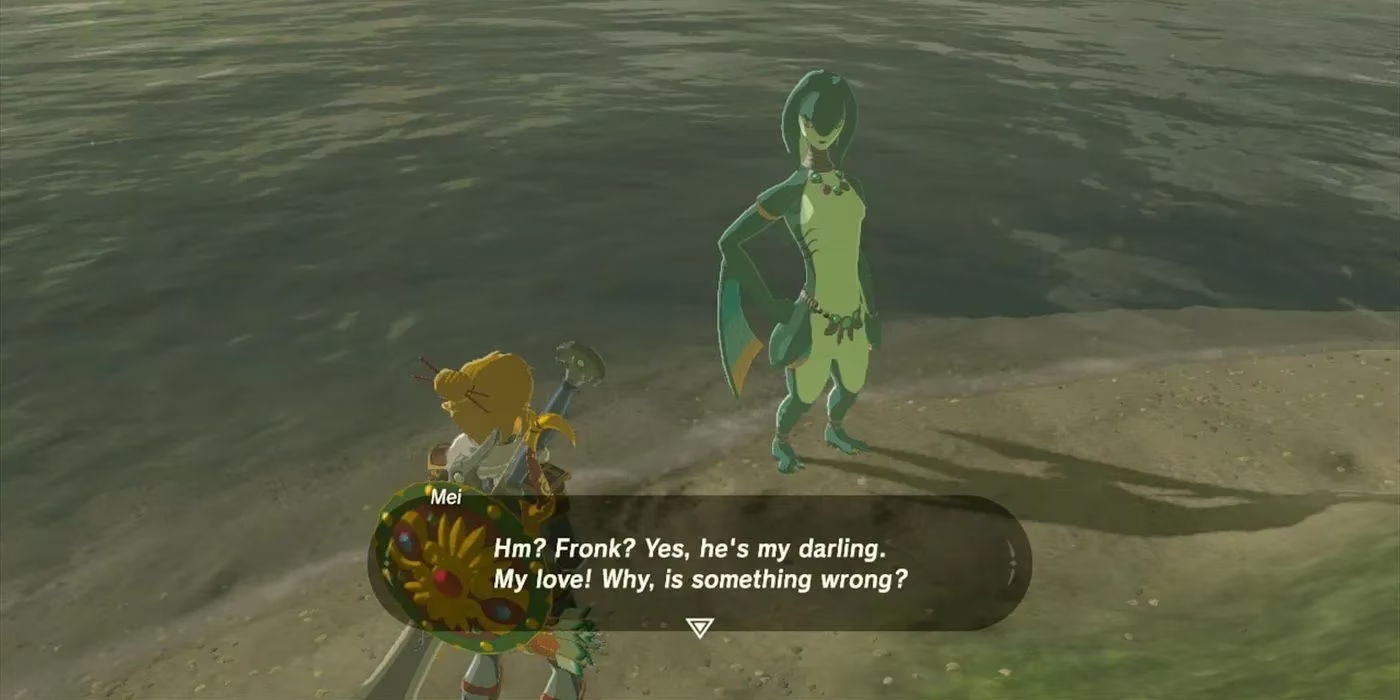
Now, here's where the poetry deepens. This whole scenario was a beautiful callback, a direct sequel to a moment from my past life in Breath of the Wild. Back then, after dealing with the Divine Beast Vah Ruta, I met a similarly distressed Fronk in a quest called "A Wife Washed Away." The beats were eerily similar: worried husband, missing wife, a hero playing messenger. Back in the BOTW days, I found Mei swimming near Hylia Island, and my reward was a handful of Staminoka Bass she left behind in her hurry to get home.
This context is everything. It transforms Fronk from a possibly overbearing husband into a deeply caring partner whose fears are rooted in experience. In BOTW, he feared the active threat of Vah Ruta. In TOTK, he fears the unpredictable chaos of a world unmoored by Ganondorf. Mei, in both games, is simply living her life, perhaps a bit forgetfully, but she always rushes back the moment she knows she's caused concern. Their love story, told across two games and two calamities, is one of Hyrule's most enduring and sweetest subplots. It's a masterclass in using gameplay to build character lore.
The Soul of Hyrule: Why We Do the "Extra" Work
Let's be real, in many games, side quests are filler. But in the hands of Nintendo, in the world of Tears of the Kingdom, they are the filler that gives the bread its flavor and texture. They perform a magic trick:
-
They flesh out the universe. They add layers of context and history that the main plot can't always accommodate.
-
They make the world feel lived-in. From helping Mattison discover her Gerudo heritage in Tarrey Town to reuniting old friends, these quests show a community functioning, worrying, and celebrating together.
-
They reward you in soul and supplies. Beyond Rupees and recipes, they grant knowledge. For a hero who spent a century in the Shrine of Resurrection with amnesia, these interactions are how I relearned what it meant to be part of Hyrule.
This interconnectedness, this web of callbacks and evolving relationships, is the secret sauce of TOTK. It's old enough now, released back in 2023, but playing it in 2026 feels like visiting a place where history matters. The references to BOTW aren't just Easter eggs; they're continuations. They assure us that our previous actions, our previous connections, had weight.
The Legacy of a Journey
As I look back, the grand dungeons and sky islands were spectacular, but my memory lingers on Fronk's relieved smile, on the shared history in a simple fish skewer. Tears of the Kingdom and Breath of the Wild together form a diptych of unparalleled world-building. They taught me that saving a kingdom isn't just about defeating a demon king; it's about preserving the small, tender moments that make that kingdom worth saving. The side quests are not distractions; they are the point. They are the quiet poems written in the margins of the epic, and they are, without a doubt, worth completing. For the rewards, for the lore, but most of all, for the feeling that you didn't just visit Hyrule—you helped it heal, one worried husband, one independent child, and one heartfelt reunion at a time.
Comments