Ultrahand's Legacy: How Tears of the Kingdom's Game-Changing Mechanic Redefined Zelda
Imagine a game so good, it makes its already legendary predecessor feel a bit... old-fashioned. That's the wild reality of The Legend of Zelda: Tears of the Kingdom in 2026. It wasn't just a sequel; it was a full-blown evolution, taking the incredible foundation of Breath of the Wild and cranking the creativity dial up to eleven. Forget just exploring Hyrule—suddenly, you were building it, piece by glorious, wobbly piece.
The Game-Changer in Your Pocket: Ultrahand
Remember those classic Sheikah Slate abilities? Magnesis, Stasis? Yeah, Tears of the Kingdom said, "Hold my Lon Lon Milk." It handed Link a brand-new toolkit from the start: Fuse, Ascend, Recall, and the star of the show, Ultrahand. While all were genius, Ultrahand was the real magic trick. It wasn't just an ability; it was an invitation to play god in a toybox filled with Zonai devices. The game basically went, "Here's some glue and a pile of parts. Go nuts." And nuts we went.
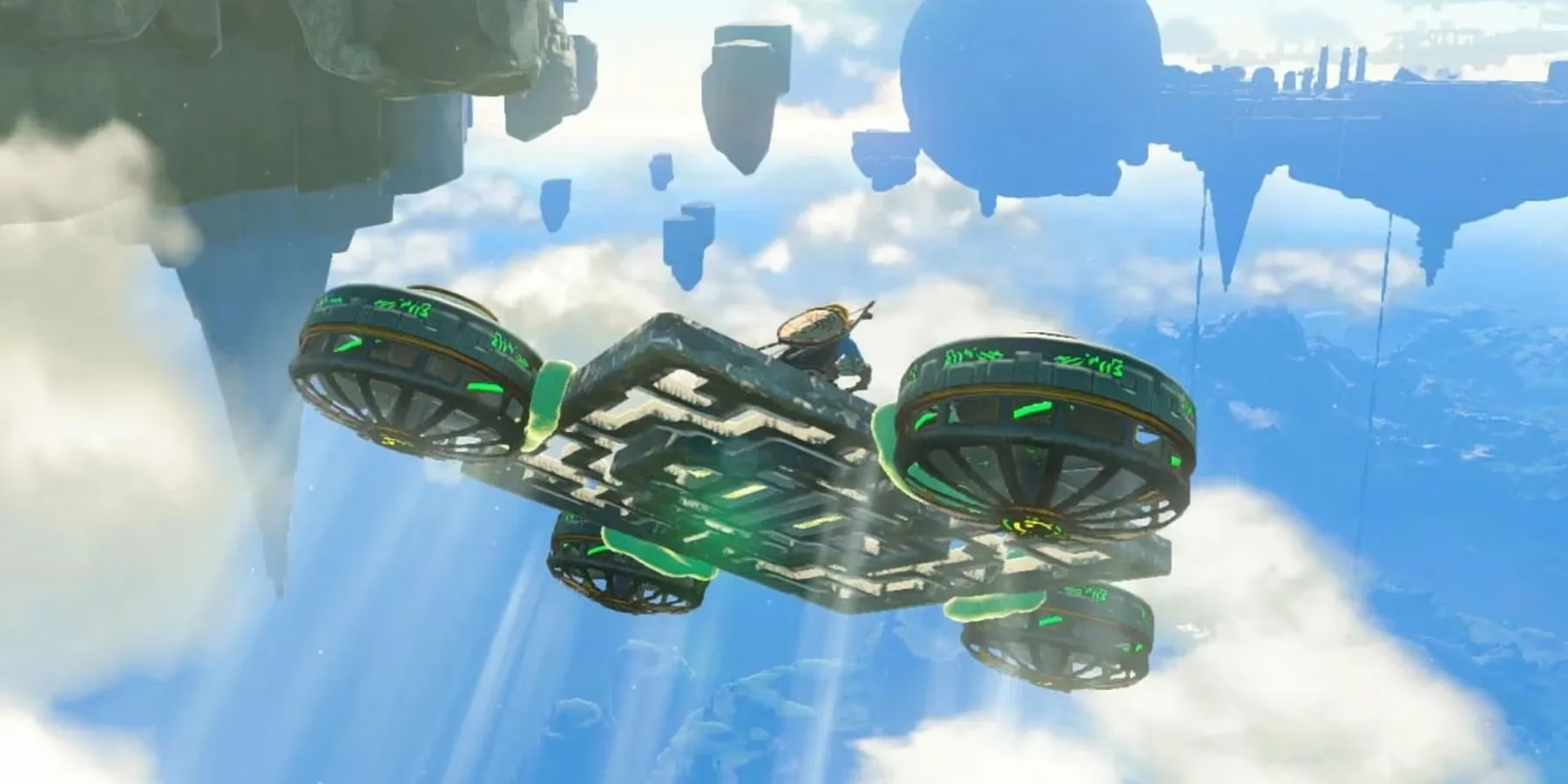
This single mechanic transformed the experience from "conquering Hyrule" to "engineering your own hilarious and brilliant solutions." Need to cross a chasm? Why climb when you can build a flying machine... that might also have flamethrowers attached? The replay value became practically infinite because the only limit was the player's imagination (and sometimes, the game's physics engine, bless its heart).
A Double-Edged Master Sword: Ultrahand's Lasting Impact
Here's the thing about setting a new gold standard—it makes everything else look a little less shiny. Ultrahand was so revolutionary, so fundamentally liberating, that it created a unique problem for the future. Going back to play Breath of the Wild now can feel, well, a bit restrictive. You catch yourself thinking, "If only I could Ultrahand these logs together..." It's a testament to its success, but also a potential curse.
The big question hanging over the next Zelda adventure is: what comes after Ultrahand? Nintendo has a tough act to follow. Simply bringing it back might feel like a retread, but not including something with similar "wow" factor could make the next game feel like a step back. Players have tasted that ultimate creative freedom—taking it away is a risky move.
The Path Forward: Building on a Legacy
So, where does the series go from here? A few possibilities are on the table:
-
The Evolution: Introduce a new mechanic that changes the game's language again. Maybe something focused on manipulating time or terrain in an even deeper way.
-
The Refinement: Take the "player-driven solutions" concept and apply it to a new aspect, like dungeon creation or social systems within Hyrule.
-
The Bold Shift: (This one's a long shot) Return to a more structured, linear format. But let's be real—after the open-world sandbox triumphs, would fans really want that?
Ultrahand did more than just let us build cool stuff; it shifted the entire philosophy of the game towards user-generated joy. It proved that players, when given the right tools, will create moments more memorable than any scripted sequence. That's the real legacy Nintendo has to carry forward.
In the end, Tears of the Kingdom didn't just raise the bar; it launched the bar into orbit with a homemade rocket. The next hero's journey will have to find a way to reach it, and honestly? We can't wait to see how they try. The kingdom's future is unwritten, but one thing's for sure—it'll be built on a very, very tough act to follow. ✨
Comments