Top Games to Play After The Legend of Zelda: Tears of the Kingdom - 2026 Edition
When players complete their journey through Hyrule in The Legend of Zelda: Tears of the Kingdom, they often find themselves searching for that next grand adventure. The unique blend of open-world exploration, creative building mechanics, and emergent gameplay creates a specific craving that few titles can satisfy. While no game perfectly replicates the magic of fusing objects together and constructing elaborate contraptions, several remarkable experiences capture similar elements of freedom, discovery, and player expression. From vast fantasy realms to procedurally generated galaxies, these recommendations span multiple platforms and genres, each offering its own interpretation of what makes open-world adventures so captivating. Whether you're drawn to the physics-based experimentation, the sense of boundless exploration, or the intricate world-building, this curated list provides diverse pathways to continue your gaming journey beyond the skies and depths of Hyrule.
10. The Legend of Zelda: Breath of the Wild - The Foundation of Modern Hyrule
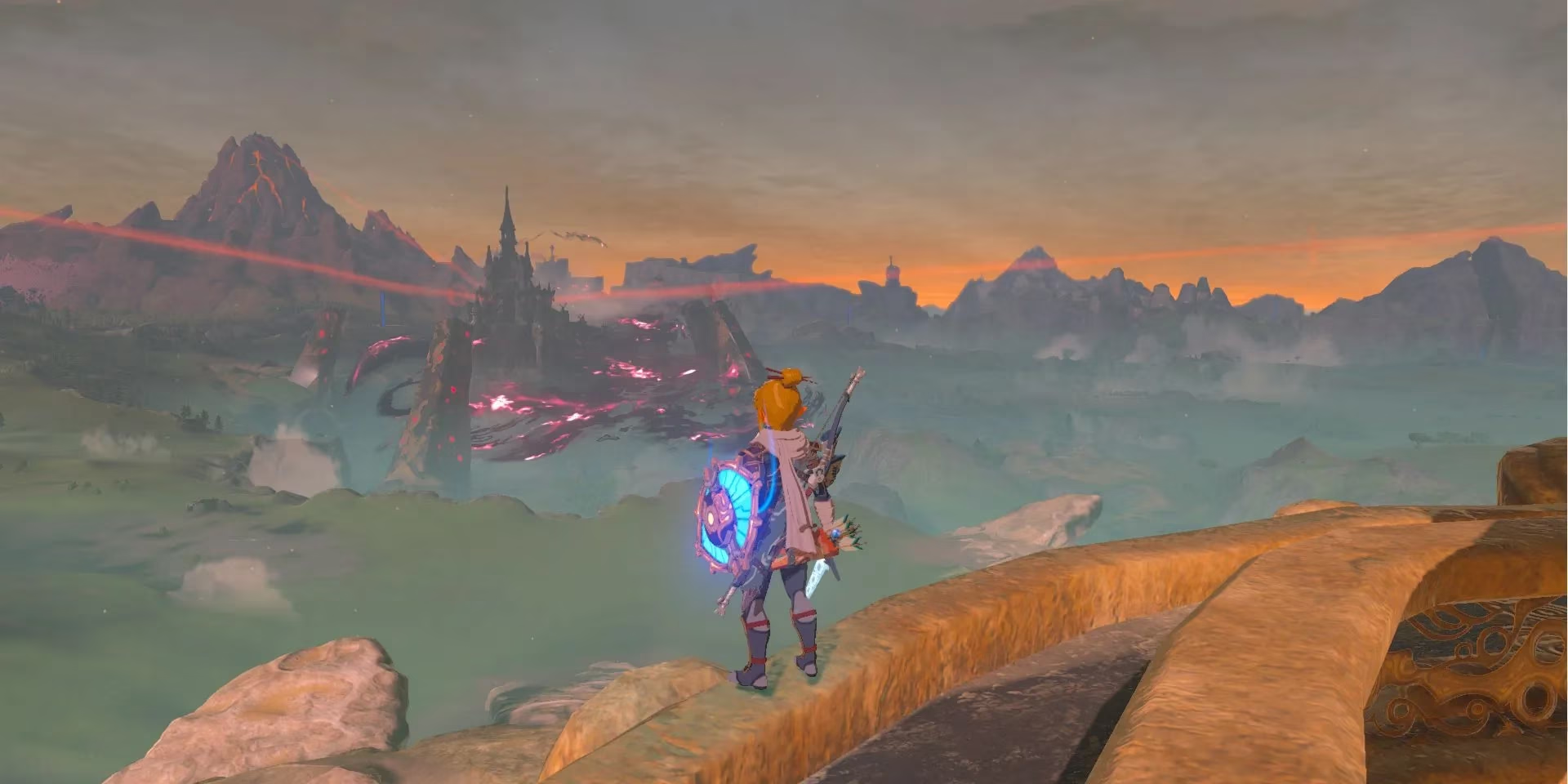
Naturally, the direct predecessor to Tears of the Kingdom deserves the first mention. While it lacks the elaborate Ultrahand building mechanics, sky islands, and the haunting Depths, Breath of the Wild established the revolutionary open-air formula that defined a generation of adventure games. The game's brilliance lies in its minimalist storytelling and emphasis on organic discovery. Players still experience:
-
Physics-based interactions with the Sheikah Slate abilities
-
Complete freedom to approach objectives in countless creative ways
-
Environmental storytelling that rewards curiosity
-
The foundation of Hyrule's geography and lore
What makes it particularly fascinating in 2026 is watching how Nintendo's vision evolved between these two masterpieces. The absence of building mechanics actually makes certain speedrunning techniques like wind bombing more accessible and spectacular. For those who jumped straight into Tears of the Kingdom, returning to this origin point offers a profound appreciation for how game design philosophies develop over time.
9. Horizon Zero Dawn - Mechanical Marvels and Primitive Power
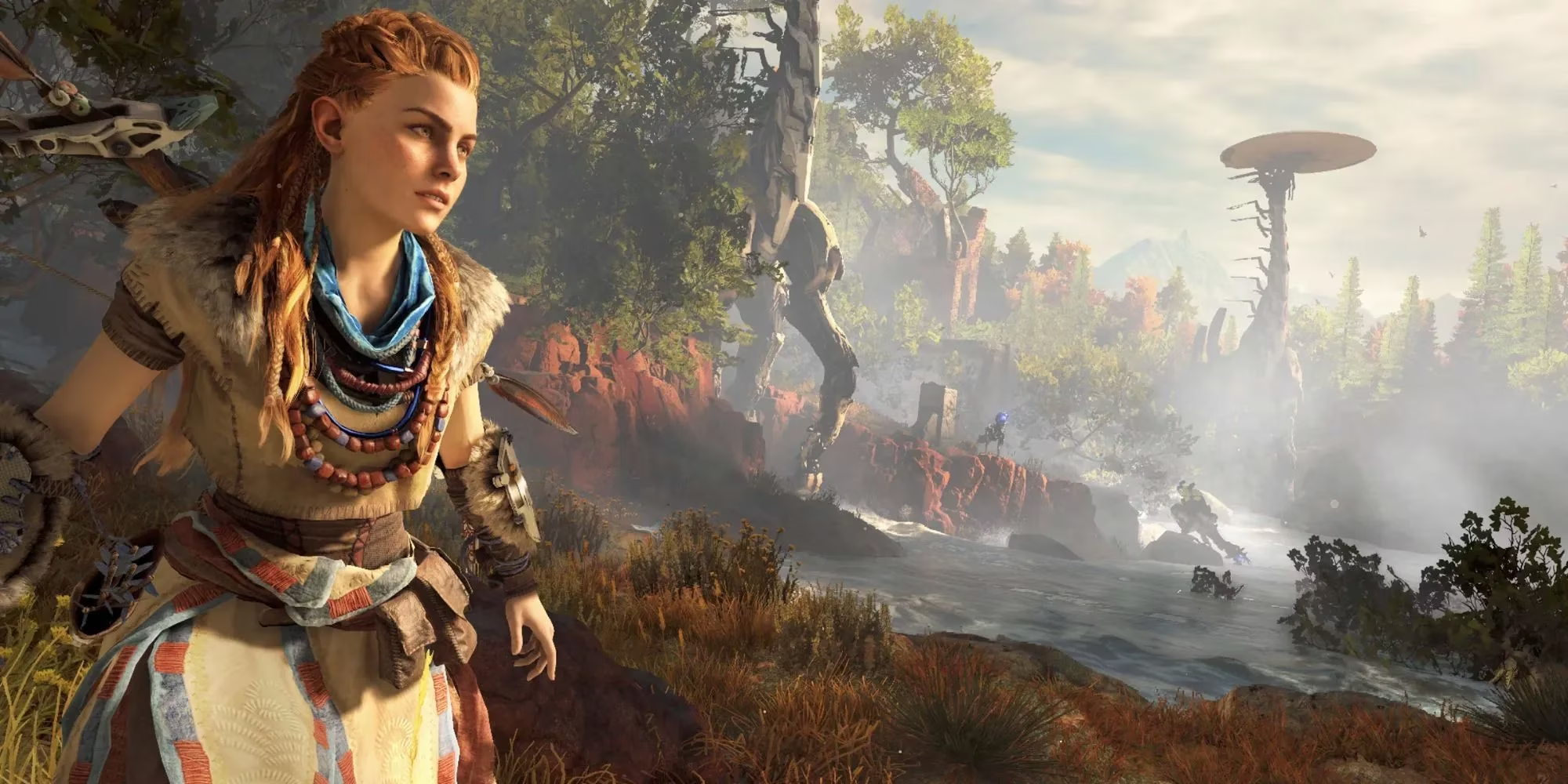
Released in the same landmark year as Breath of the Wild, Horizon Zero Dawn presents a different perspective on post-apocalyptic exploration. While both feature protagonists using primitive weapons against technologically advanced threats, Aloy's journey through the ruins of the Old Ones emphasizes narrative depth and tactical combat. Key similarities include:
-
Vast, visually stunning open worlds with diverse biomes
-
Resource gathering and crafting systems
-
Climbing mechanics that encourage vertical exploration
-
Stealth approaches to overwhelming encounters
Where it diverges is in its more structured storytelling and character development. The game's strength lies in unraveling the mystery of how civilization fell and why robotic creatures now roam the earth. While not as focused on systemic player expression, its combat offers satisfying depth through weak point targeting and elemental strategies against different machine types.
8. Immortals Fenyx Rising - Mythological Mayhem
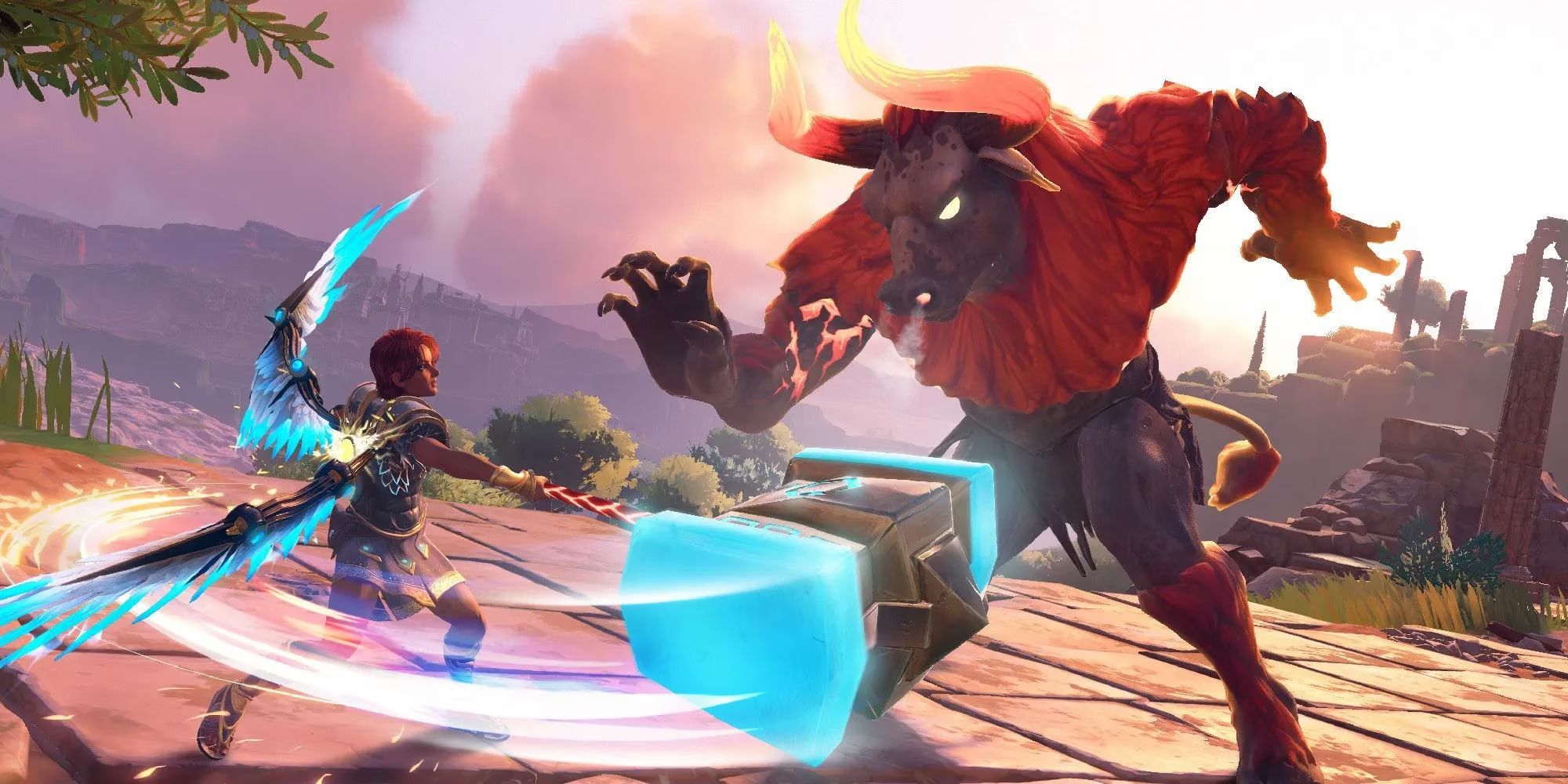
Ubisoft's vibrant take on the Breath of the Wild formula deserves recognition for being one of the first major titles to incorporate sky islands into open-world design—a full two years before Tears of the Kingdom. Set in a stylized interpretation of Greek mythology, the game combines divine powers with exploration mechanics that feel familiar yet distinct. Notable features:
-
Customizable protagonist with extensive cosmetic options
-
Puzzle-filled vaults that test both logic and platforming skills
-
Mounts and flight mechanics that make traversal exhilarating
-
Humor-infused storytelling with narration from Prometheus and Zeus
What sets Immortals Fenyx Rising apart is its willingness to embrace absurdity while maintaining engaging gameplay systems. The combat allows for creative combinations of godly abilities, and the environmental puzzles often require viewing the world from new perspectives. Its multiplatform availability makes it accessible to virtually everyone with a gaming device.
7. Elden Ring - Freedom Forged in Challenge
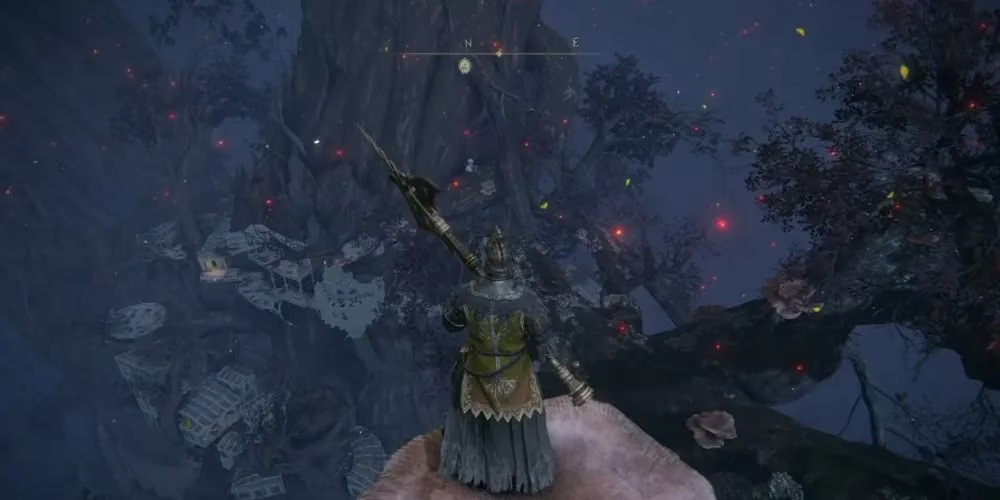
From Software's masterpiece shares surprising philosophical DNA with Nintendo's open-world Zelda titles. Both games embrace the concept of rewarding curiosity and allowing players to forge their own paths through meticulously crafted worlds. While the difficulty curve is considerably steeper, the sense of discovery is equally potent. Parallels include:
-
Non-linear progression that encourages backtracking with new abilities
-
Environmental storytelling that reveals lore through placement and details
-
Diverse approaches to combat and problem-solving
-
Memorable landmarks that serve as both navigation points and destinations
Elden Ring's Lands Between offers a darker, more mysterious world where every corner hides potential danger or revelation. The game's character customization and build variety provide player expression through statistical choices rather than mechanical construction. For those who enjoy uncovering secrets and mastering challenging encounters, it's an essential experience.
6. No Man's Sky - Infinite Exploration
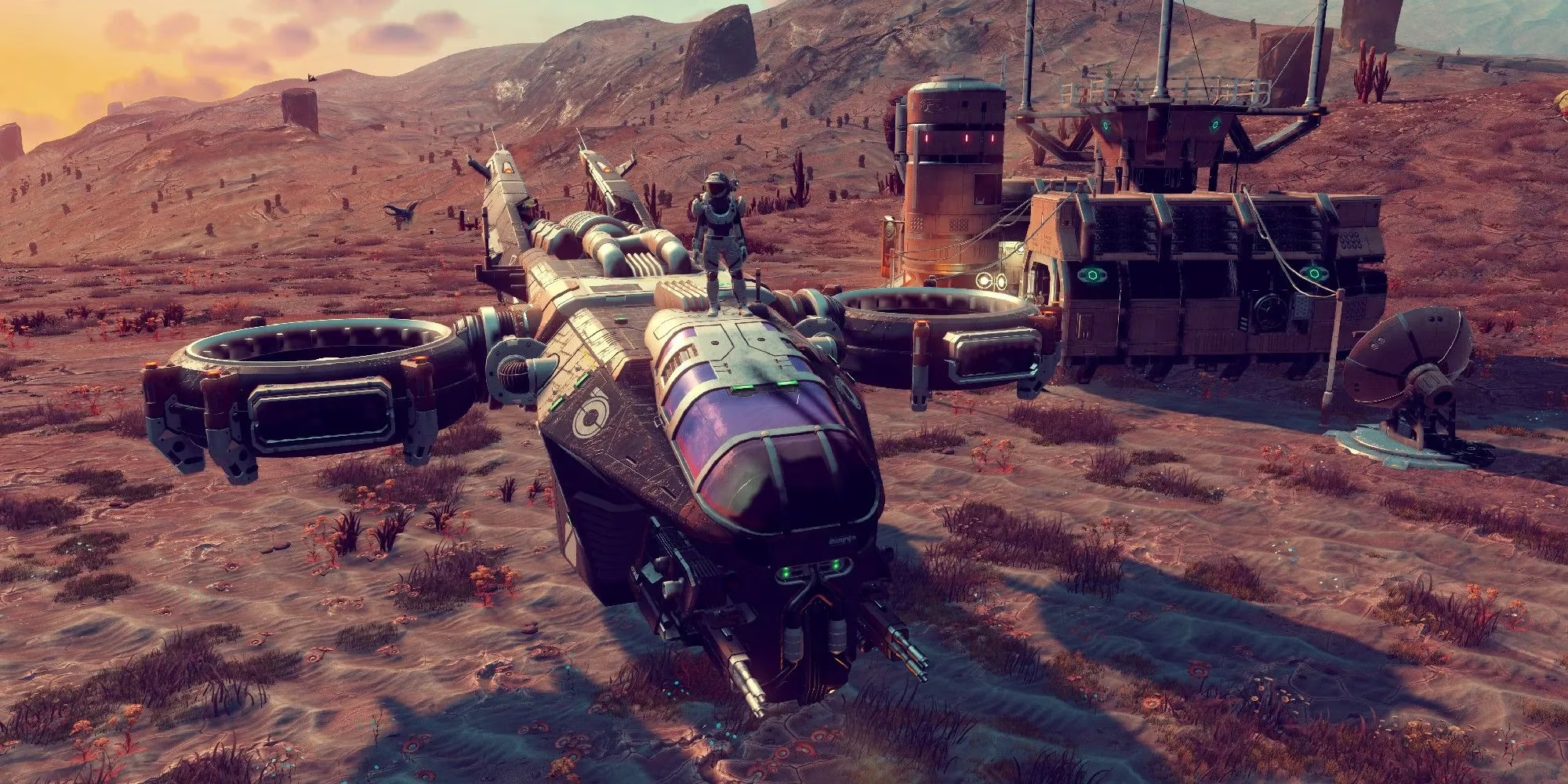
Hello Games' redemption arc is now legendary in the industry, and by 2026, No Man's Sky has evolved into one of the most comprehensive space exploration simulators available. While it lacks the handcrafted narrative of Tears of the Kingdom, it offers something equally valuable: genuine discovery in a procedurally generated universe. Players can:
-
Explore over 18 quintillion planets with unique ecosystems
-
Build bases on any discovered world
-
Craft and upgrade technology, weapons, and vehicles
-
Encounter other players in shared universe events
The Switch version performs surprisingly well, making interstellar travel accessible on Nintendo's hybrid console. What connects it to Zelda is the fundamental joy of seeing something no one else has seen and making your mark on an indifferent universe. The building mechanics, while different from Ultrahand, allow for creative expression on a planetary scale.
5. Aloft - Skyward Survival
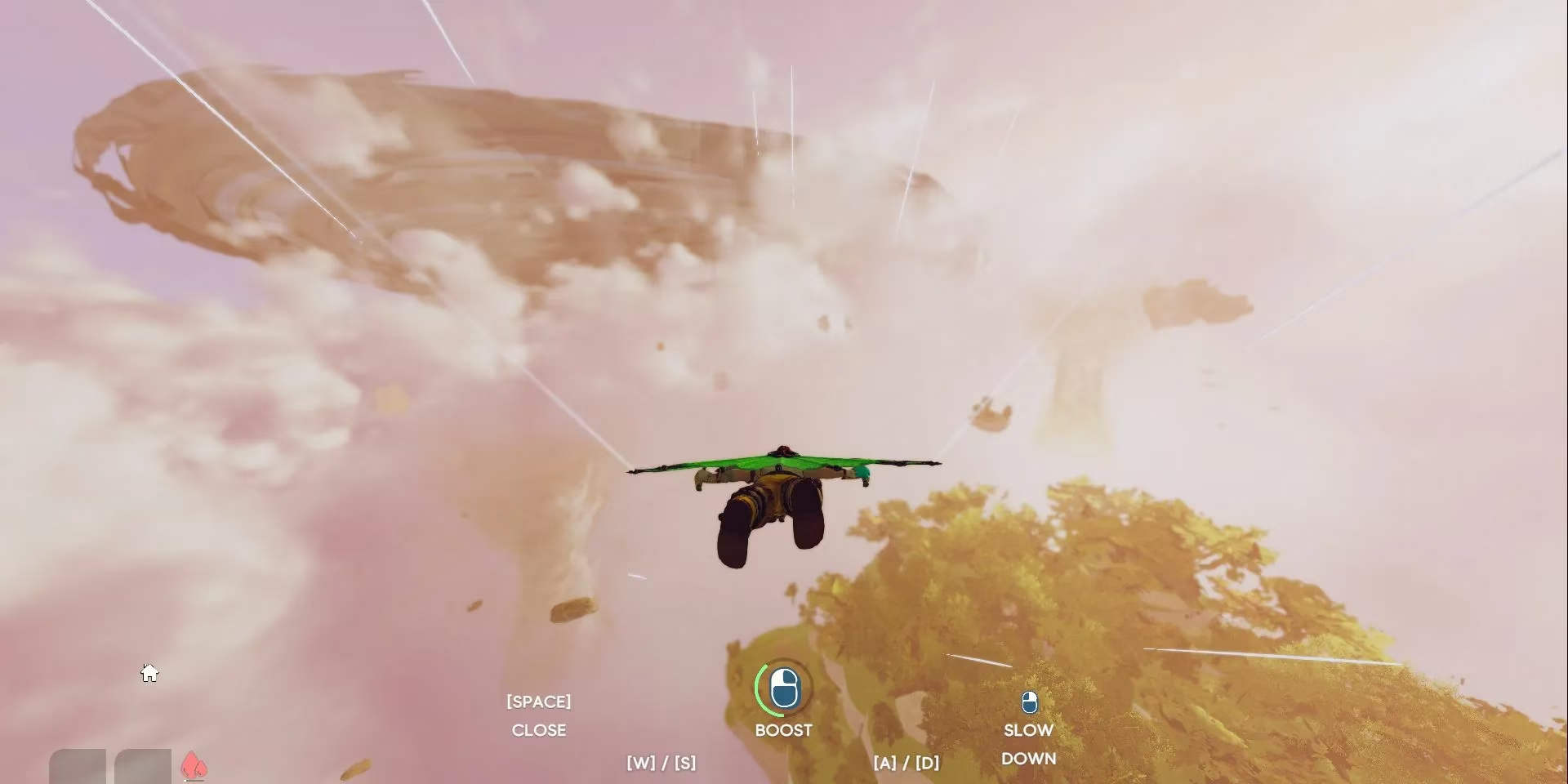
As a forthcoming title generating considerable buzz, Aloft directly addresses the sky island fascination that Tears of the Kingdom popularized. This cooperative survival game emphasizes verticality, creativity, and environmental harmony. While still in development as of 2026, its demo showcases promising mechanics:
-
Dynamic island ecosystems that respond to player intervention
-
Building systems that encourage architectural creativity
-
Weather systems that affect traversal and survival
-
Cooperative exploration with friends
The game positions itself as less narrative-driven and more systems-focused, allowing players to create their own stories through interaction with the environment. For those who enjoyed constructing elaborate Zonai devices, Aloft offers similar satisfaction through more traditional building mechanics in a dedicated survival context.
4. Minecraft - The Ultimate Sandbox
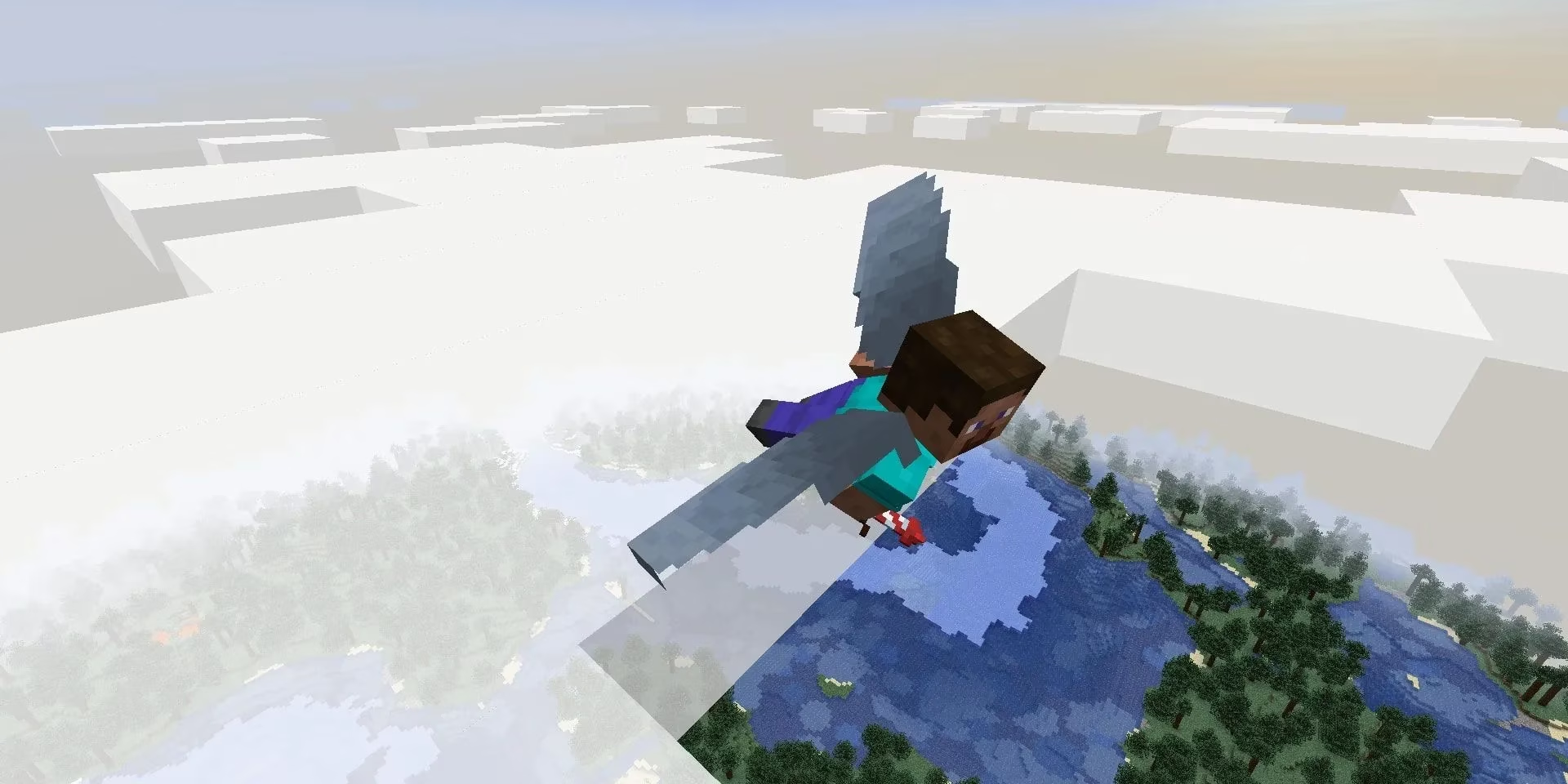
It might seem obvious, but Mojang's block-building phenomenon deserves inclusion for how it empowers player creativity. While lacking the polished adventure structure of Zelda titles, Minecraft offers something arguably more valuable: complete freedom to transform its world. Through mods and community content, players have created:
-
Custom adventure maps with Zelda-inspired dungeons
-
Redstone contraptions that rival Zonai device complexity
-
Resource packs that visually transform the game
-
Server experiences with structured questlines
The base game's exploration loop—mine resources, craft tools, build shelter, explore further—shares DNA with survival elements present in both Breath of the Wild and Tears of the Kingdom. What begins as a simple survival experience can evolve into elaborate creative projects or complex automation systems, all within the same world.
3. The Witcher 3: Wild Hunt - Narrative Depth in Vast Lands
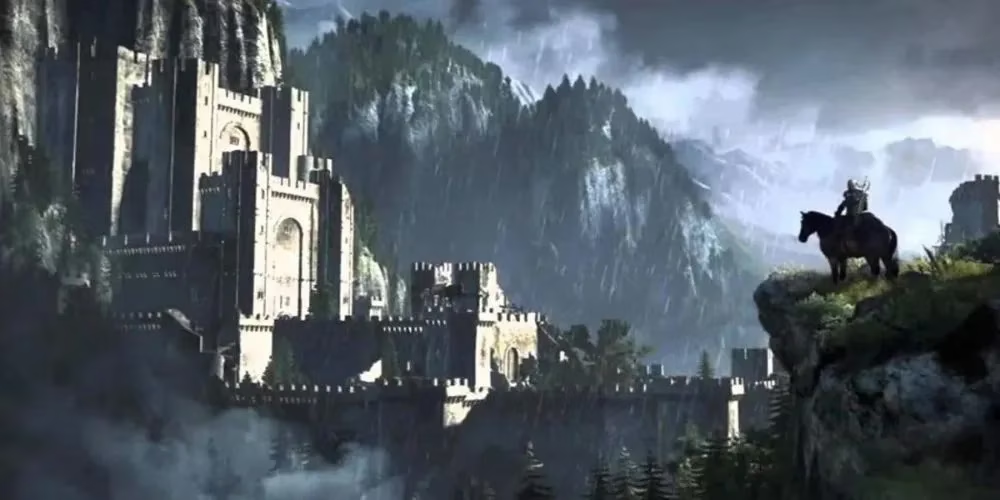
CD Projekt Red's magnum opus demonstrates how narrative excellence can coexist with open-world design. While more structured than Nintendo's approach, The Witcher 3 creates the illusion of complete freedom through branching questlines and meaningful choices. Players experience:
-
Morally complex decisions with lasting consequences
-
Rich character development across dozens of hours
-
Diverse regions with distinct cultures and conflicts
-
Monster hunting mechanics that require preparation and research
The Switch version remains a technical marvel, proving that ambitious worlds can thrive on modest hardware. What connects it to Zelda is the sense of place—whether navigating Novigrad's crowded streets or exploring Skellige's windswept islands, every location feels purposeful and alive with stories waiting to be discovered.
2. Xenoblade Chronicles - Expansive JRPG Worlds
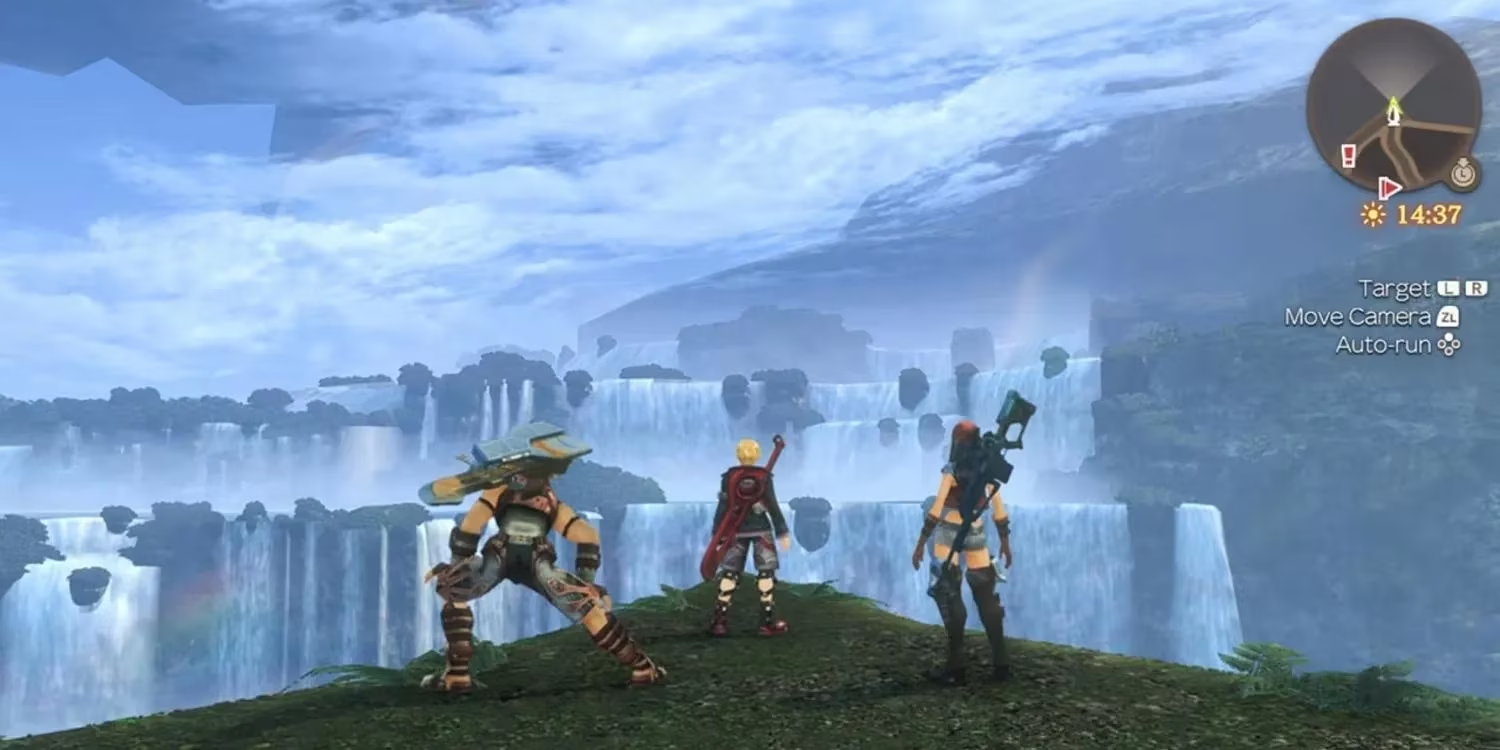
Monolith Soft's epic RPG series shares development DNA with Zelda through Nintendo's internal collaborations, and this connection shows in their approach to world design. While more linear in structure, the Xenoblade games feature:
-
Massous environments that dwarf many open-world games
-
Intricate side quest systems that flesh out supporting characters
-
Real-time combat with strategic positioning elements
-
Gradual world unlocking through story progression
The Definitive Edition on Switch offers the ideal starting point, with enhanced visuals and quality-of-life improvements. What makes these games compelling for Zelda fans is their sense of scale—standing on the shoulder of a titan and seeing distant landmarks that will become destinations hours later creates a powerful sense of anticipation and discovery.
1. Tunic - Modern Retro Adventure
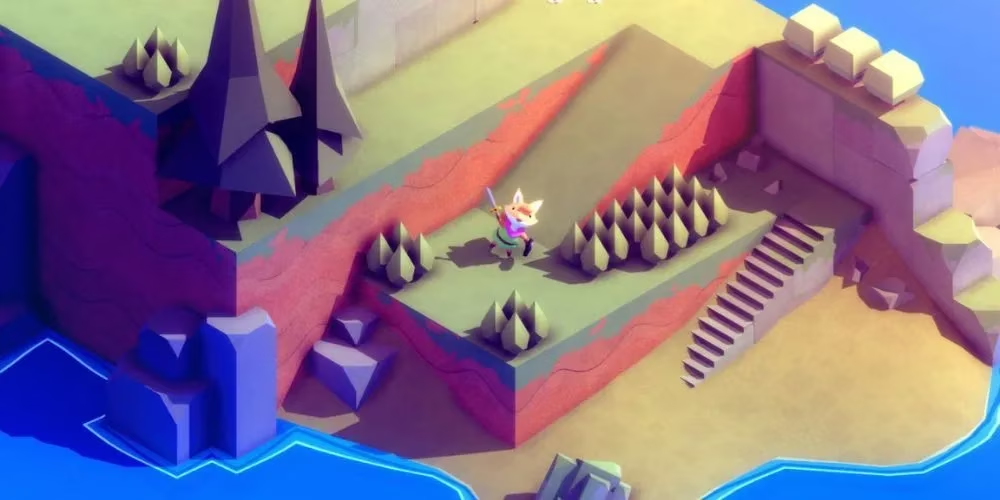
Andrew Shouldice's love letter to classic adventure games distills the essence of discovery that makes Zelda titles so memorable. While smaller in scope than Tears of the Kingdom, Tunic offers concentrated brilliance through:
-
In-game manual discovery that teaches mechanics organically
-
Environmental puzzles that require observational skills
-
Combat that rewards pattern recognition and timing
-
Secrets within secrets that encourage community collaboration
The game's genius lies in how it withholds information, forcing players to pay attention to visual cues and experiment with systems. Like the original Legend of Zelda, progress feels earned through cleverness rather than simply following waypoints. For those who enjoy the "aha!" moments of Zelda's puzzle design, Tunic delivers them in abundance.
Choosing Your Next Adventure 🌟
Each of these titles captures different aspects of what makes Tears of the Kingdom special:
| Game | Primary Similarity | Best For Players Who Enjoy |
|---|---|---|
| Breath of the Wild | Foundation of mechanics | Understanding Zelda's evolution |
| Horizon Zero Dawn | Open-world structure | Narrative-driven exploration |
| Immortals Fenyx Rising | Traversal and puzzles | Lighthearted mythological adventures |
| Elden Ring | Non-linear discovery | Challenging secrets and combat |
| No Man's Sky | Creative freedom | Limitless exploration and building |
| Aloft | Sky island exploration | Cooperative survival and creation |
| Minecraft | Player expression | Unlimited creative possibilities |
| The Witcher 3 | World immersion | Rich storytelling and characters |
| Xenoblade Chronicles | Vast environments | JRPG progression in huge worlds |
| Tunic | Puzzle-solving satisfaction | Clever secrets and discovery |
Ultimately, the magic of Tears of the Kingdom lies in how it empowers players to create their own stories through interaction with its systems. While no single game replicates this exact alchemy, each recommendation offers its own interpretation of adventure, discovery, and player agency. Whether you're constructing elaborate machines, unraveling environmental mysteries, or simply getting lost in beautifully crafted worlds, the spirit of exploration continues beyond Hyrule's borders. In 2026, with gaming technology continuing to advance, these experiences remind us that sometimes the most memorable journeys are those we chart for ourselves.
Comments