The Well-Worn Hair Band: A Nostalgic Spark for the Future of Customization in Zelda
In the sprawling, inventive world of The Legend of Zelda: Tears of the Kingdom, players are granted an almost divine level of creative freedom. With Zonai devices enabling the construction of anything from simple carts to complex flying machines, the game sets a new benchmark for open-world interaction and problem-solving. Amidst this technological wonder, however, lies a quieter, more personal form of expression. Link, the series' iconic, silent hero, has seen his visual identity evolve through various artistic interpretations, from the cartoonish charm of The Wind Waker to the gritty realism of Twilight Princess. Tears of the Kingdom and its predecessor, Breath of the Wild, further expanded this by offering numerous armor sets for functional and aesthetic variety. Yet, one unassuming item discovered in 2026's Hyrule hints at a future where player-driven customization could become a core pillar of the Zelda experience.
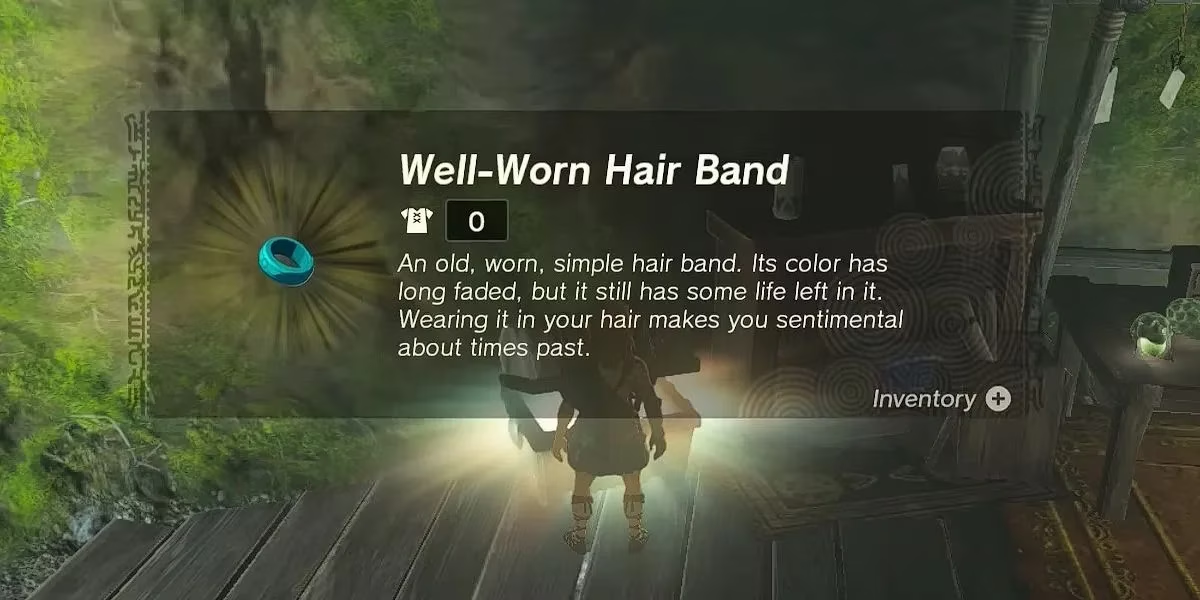
The Well-Worn Hair Band is more than just gear; it's a poignant narrative artifact. Tucked away in the well outside Princess Zelda's house in Hateno Village, its discovery is one of the game's most heartfelt moments, seamlessly blending exploration with emotional storytelling. The item description reads: "An old, worn, simple hair band. Its color has long faded, but it still has some life left in it. Wearing it in your hair makes you sentimental about times past." For veterans of Breath of the Wild, this band allows Link to revert to his classic hairstyle from that 2017 adventure, serving as a direct, tactile connection to cherished memories. It's a masterful touch that demonstrates how environmental storytelling can resonate on a personal level.
However, this sentimental treasure comes with a significant gameplay trade-off. As a purely cosmetic item, the hairband offers zero defense and occupies the crucial headwear slot. In Tears of the Kingdom—a title renowned for its challenging combat and environmental hazards—forgoing protective headgear is often a luxury players cannot afford. This creates a fascinating tension between self-expression and survival:
-
Pros of the Hair Band:
-
✅ Evokes powerful nostalgia.
-
✅ Offers unique, story-driven customization.
-
✅ Allows Link to sport a classic look.
-
Cons of the Hair Band:
-
❌ Provides no armor rating or special effects.
-
❌ Blocks use of valuable helmets (e.g., the Ancient Helm for set bonuses or the Zora Helm for swimming).
-
❌ Cannot be upgraded at a Great Fairy fountain or dyed at the Kochi Dye Shop.
This limitation highlights a broader opportunity for the franchise. While Link's muteness has been a longstanding characteristic, it becomes more pronounced in an era where supporting characters and even rival protagonists in other games are fully voiced in cinematic cutscenes. Enhancing visual customization could become a vital avenue for player identification and self-expression, allowing fans to project themselves onto the Hero of Hyrule without compromising his iconic essence.
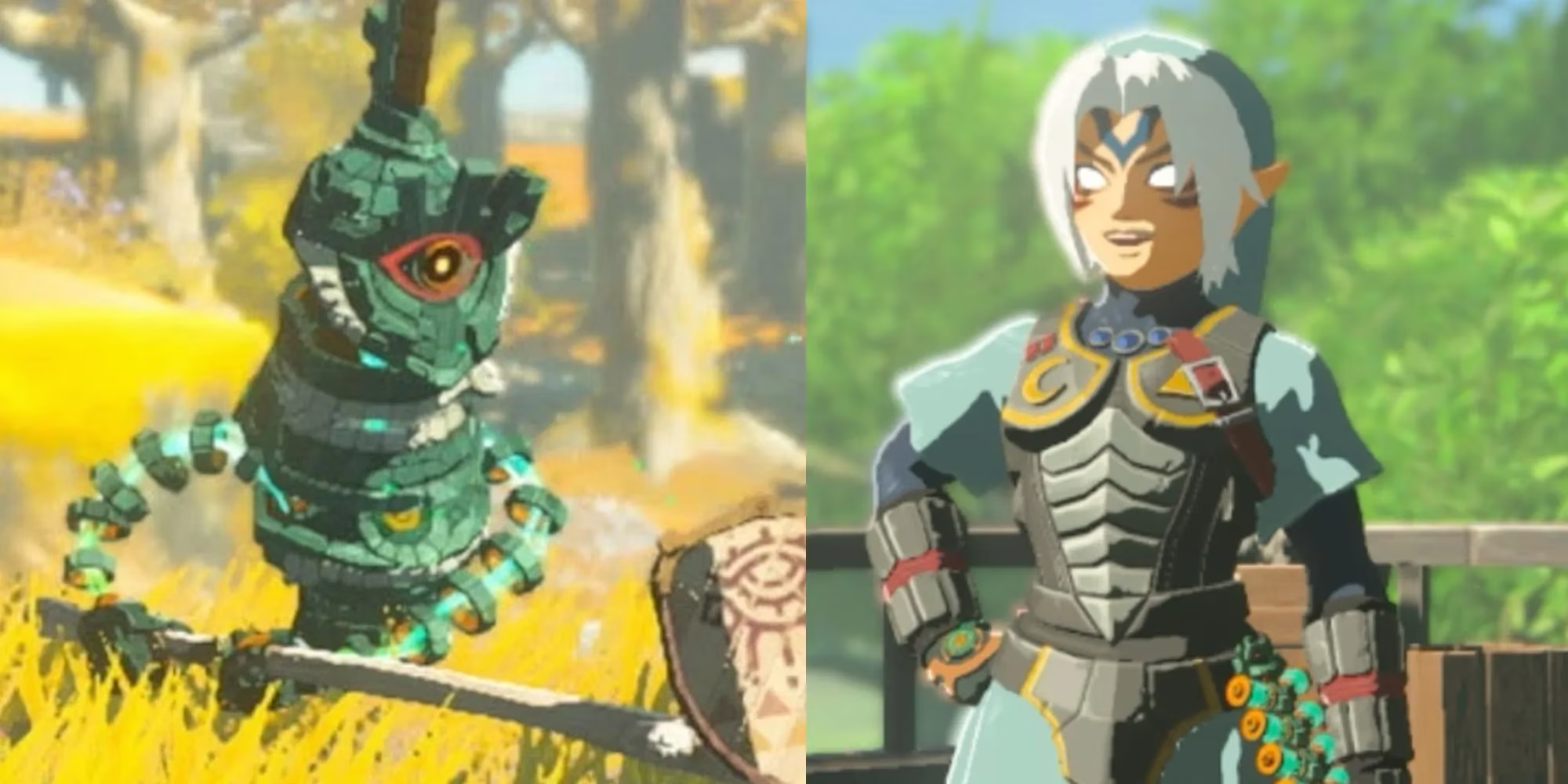
The current armor system in Tears of the Kingdom already provides a solid foundation for aesthetic diversity. Players can:
-
🎨 Dye most armor pieces at the Kochi Dye Shop.
-
👕 Mix and match sets for unique visual combos.
-
🏆 Unlock special outfits through quests and challenges (like the classic green tunic).
The Well-Worn Hair Band, though limited, points the way forward. Imagine a system where players could:
-
✂️ Customize Link's hairstyle and facial hair independently of headgear.
-
🧢 Apply cosmetic overlays to functional armor (e.g., making the Barbarian Helm look like the hair band).
-
📖 Collect more narrative-driven cosmetic items that tell smaller stories about Hyrule's history.
This approach has been successfully implemented in other narrative-driven epics. For instance, Red Dead Redemption 2 allows extensive customization of Arthur Morgan's hairstyle, beard, and clothing, letting players craft a personal version of the character without breaking narrative immersion. The Legend of Zelda franchise could adopt a similar philosophy, using items like the Well-Worn Hair Band as a blueprint. Future titles could feature a wider array of purely cosmetic discoveries—perhaps a bracelet from a past adventure, a faded scarf from a forgotten tribe, or a charm from a beloved character—that allow for deeper personalization.
In 2026, as open-world games continue to push the boundaries of player agency, the desire for meaningful character customization only grows stronger. The Well-Worn Hair Band in Tears of the Kingdom is a small, beautiful proof of concept. It shows that Nintendo understands the value of nostalgic detail and personal connection. By expanding on this idea—decoupling aesthetics from stats and offering more ways to visually tailor Link's journey—the next evolution of Zelda could empower players to not only save Hyrule but to truly make their mark on it, crafting a hero that is uniquely theirs while forever remaining the Link we all know and love. The potential is there, waiting to be unlocked, much like that small, sentimental treasure in the well.
Comments