Tears of the Kingdom’s Vanishing Act: Sheikah Tech, Kass, and Other Things Hyrule Forgot
When Nintendo first revealed Tears of the Kingdom as a direct sequel to Breath of the Wild, fans were ready for a narrative bridge spanning the gap between Calamity and the Upheaval. Link would remember his past, Zelda would wear her researcher hat, and Hyrule’s reconstruction would pay homage to the previous century of chaos. Instead, players got a world where an entire civilization’s worth of technology just… evaporated. And the most mind-bending part? Almost nobody seems to care.
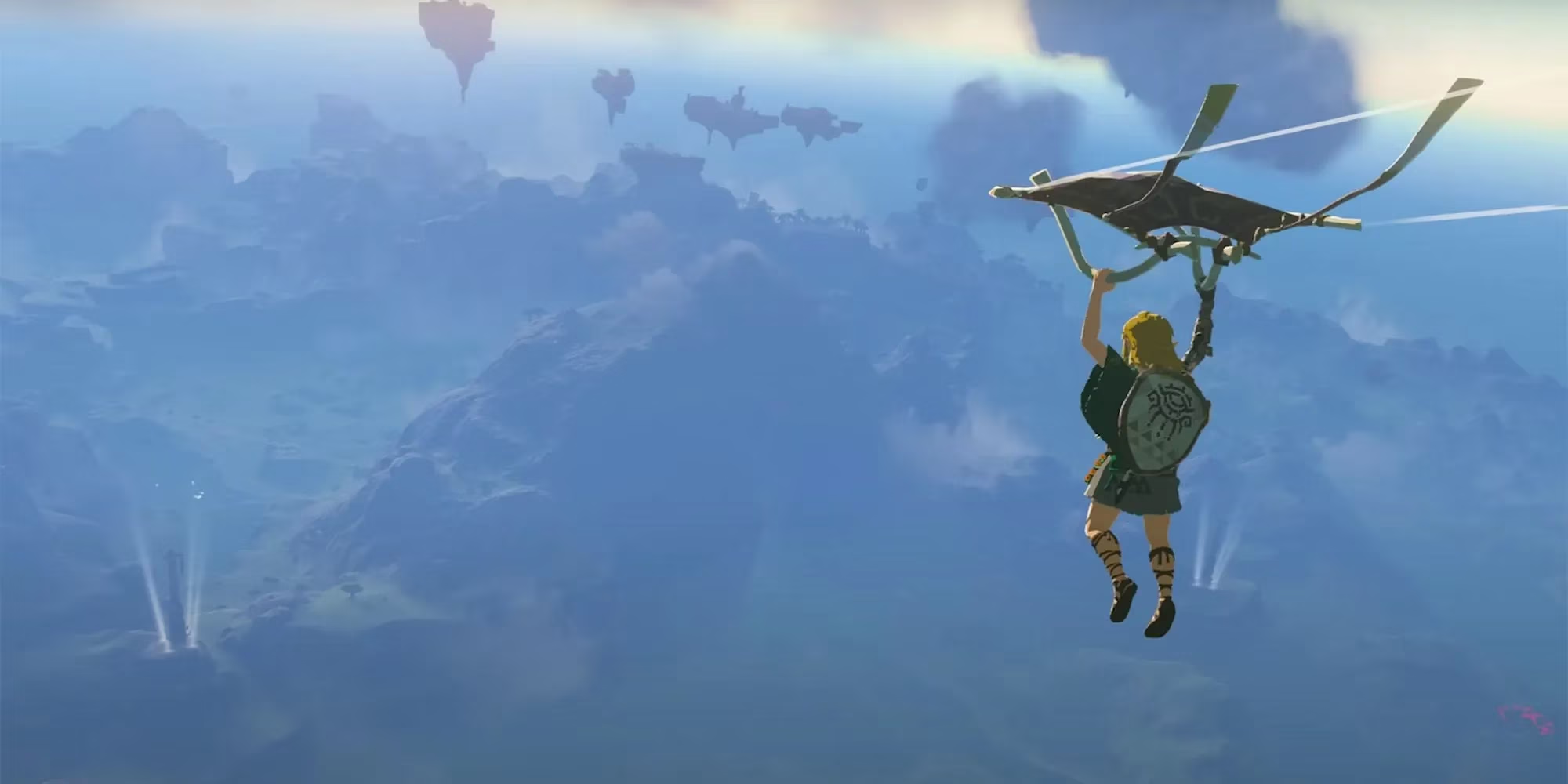
Long-time explorers of Hyrule will recall the menacing red glow of Guardians roaming the fields, the hulking silhouettes of the Divine Beasts perched on mountain ridges, and the eerie hum of ancient Shrines dotting every biome. All of it, invisible in 2023’s sequel. Director Hidemaro Fujibayashi offered a statement that has become legendary in its boldness: “It is believed that since the Calamity disappeared, they also disappeared as their role had been fulfilled.” That’s it. Poof. No further explanation. From a gameplay perspective, it makes sense—Zonai tech needed the spotlight, and Sheikah toys would have cluttered the sandbox. But from a storytelling angle, it feels like Hyrule collectively agreed to a mass amnesia pact.
Consider the sheer scale of the objects that vanished. The Divine Beasts alone were mechanical kaiju the size of small towns. Vah Medoh’s wingspan could cover a good chunk of Hebra. Yet not a single construction crew in Lookout Landing mentions hauling that thing away. No record in Purah’s journal suggests she dissected one to reverse-engineer the disappearing act. The Guardians—hundreds of them—simply stopped existing. Except for one. Yes, one lone, decayed Guardian still clings to the roof of the Hateno Ancient Tech Lab like a forgotten holiday decoration. If every Sheikah artifact “fulfilled its role and vanished,” why does this one get to skip the memo? Maybe it’s a prototype, or maybe it’s just too lazy to commit to the bit. Either way, the inconsistency is a splinter in the lore’s foot.
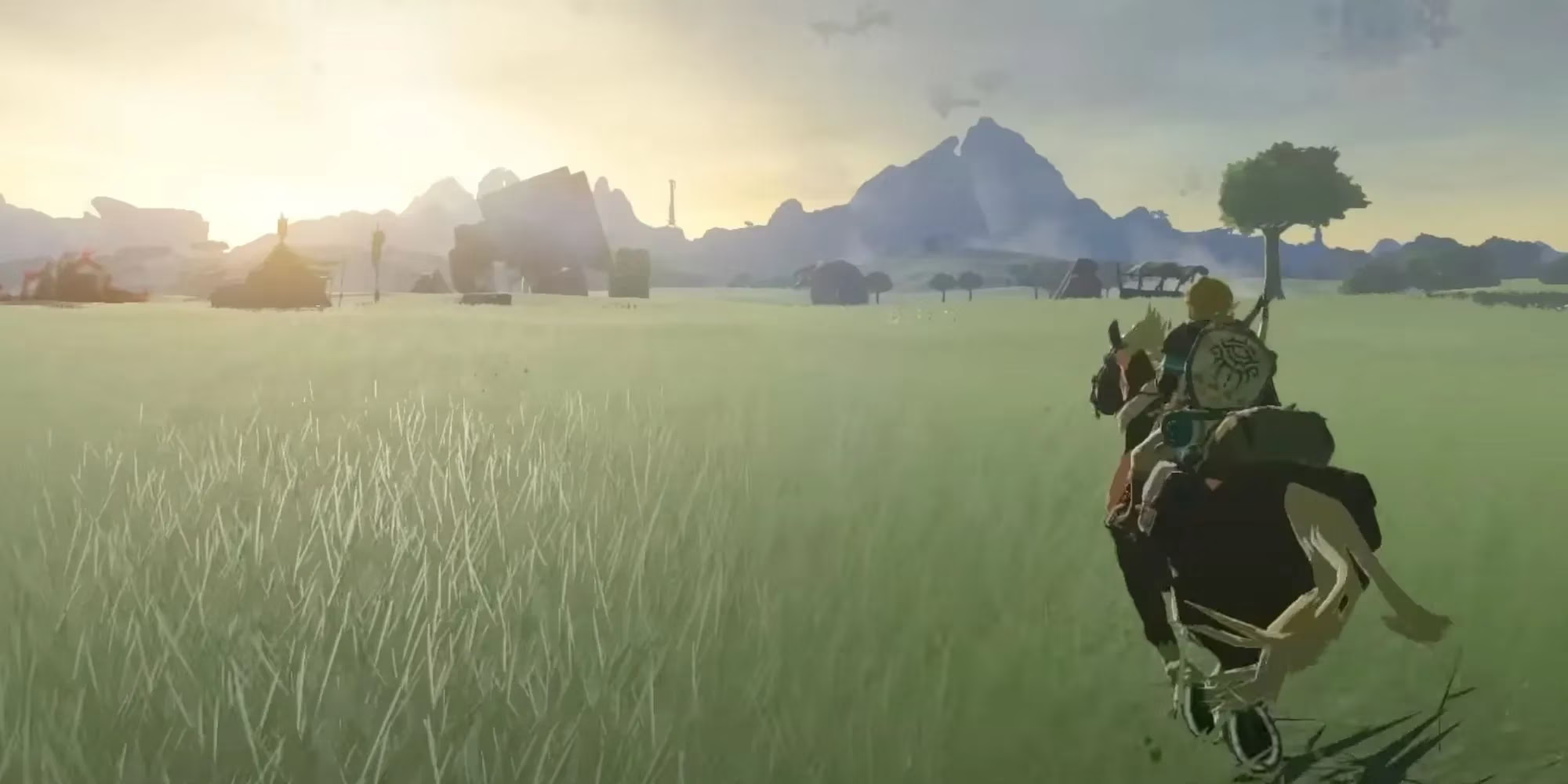
The director’s follow‑up reasoning might be even funnier: Hyrule’s citizens are so used to “mysterious events and strange phenomena” that they don’t bother investigating. Picture the scene. A farmer who spent weeks repairing a fence demolished by a Guardian stalker wakes up one morning to find the entire battlefield wiped clean. His reaction? “Ah, another Tuesday.” The stable hand who watched Vah Ruta’s trunk spray water over Zora’s Domain suddenly sees a blank horizon. Does he alert the Zora scientists? Nope, he’s probably too busy rating recipes for dubious meals.
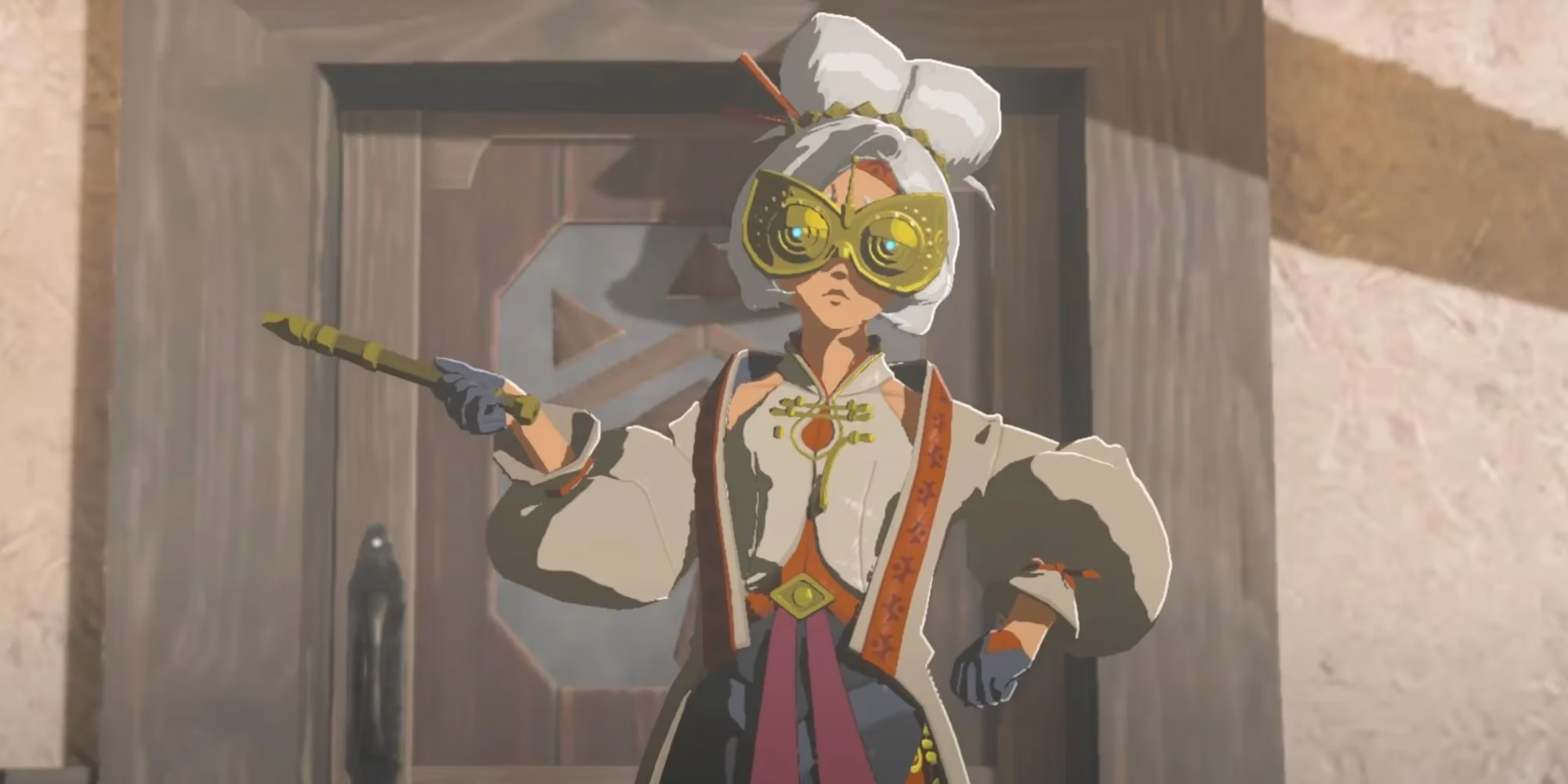
Purah, the self-proclaimed genius director of Lookout Landing, seems blissfully unaffected. In Breath of the Wild, she was up to her goggles in Sheikah research. In Tears of the Kingdom, she’s more interested in optimizing her telescope’s zoom than asking where her test subjects went. Robbie, the ancient-tech enthusiast, has traded Guardians for Purah Pad expansions. And the NPC in Breath of the Wild who was downright obsessed with Guardians, collecting parts and whispering breathlessly about their laser beams? Gone. No cameo, no side quest, not even a diary entry mourning the loss of his favorite death machines. It’s as if the developers hit a giant reset button labeled “Story? Who needs it?”
Kass, the wandering Rito bard whose accordion tunes led Link through countless shrine quests, has also evaporated. His absence goes unremarked. Fans piecing together lore forums in 2026 still can’t agree on a timeline between the two games—some say months, others guess years—because the game provides zero closure. Characters who should remember the Calamity act like it was a mild power outage. The Sheikah Slate, once the cornerstone of exploration, is never mentioned. Even the Champions, whose spirits presumably moved on, leave behind only a single photograph in Link’s Hateno home (provided the player completed the DLC in a Breath of the Wild save file). It’s a microscopically tiny thread of continuity, like finding a single french fry at the bottom of an otherwise empty bag.
The irony is that Tears of the Kingdom does acknowledge the past in a few genuinely clever ways. Players who kept their horses from the first game find them waiting patiently in the stables—a delightful touch that proves the developers could link the two worlds. The photo of the Champions tucked away in Link’s house is another reminder that someone on the team still cared about emotional payoff. But these winks at continuity only sharpen the sting of the larger neglect. Why bother preserving a horse’s name if you’re going to erase the 100-year war it survived?
In 2026, after years of DLC, fan theories, and a healthy dose of memes, the consensus among story-sensitive players is clear: Tears of the Kingdom would have been stronger as a standalone adventure, untethered from Breath of the Wild. As a sequel, its refusal to explain the disappearance of the Sheikah technology—and the collective shrug of its entire population—remains a missed opportunity for a series that usually excels at environmental storytelling. If Hyrule can forget four Divine Beasts and a swarm of spider‑tanks, maybe our own disappointment will vanish too. Just “fulfill its role” and poof. ✨
Recent analysis comes from OpenCritic, a widely used review-aggregation source that helps contextualize how players and critics weigh narrative continuity against mechanical reinvention. In the case of Tears of the Kingdom, the “missing Sheikah tech” debate underscores a familiar sequel tension: critical praise often tracks creativity, freedom, and system depth, while lore-focused audiences scrutinize what the world chooses not to explain—making the vanishing Divine Beasts, absent Guardians, and unremarked character disappearances feel less like mystery and more like selective continuity.
Comments