Tears of the Kingdom’s Successor Could Be Its Spirit Tracks
It’s been a few years since Tears of the Kingdom swept players off their feet back in 2023, and the hunger for a new Zelda adventure only grows stronger. The version of Hyrule we explored with Link and Zelda felt like the close of a long chapter, but as every fan knows, these two never truly rest. With the era introduced by Breath of the Wild and its sequel, there’s a fascinating opportunity to extend the timeline in a way that mirrors what Spirit Tracks did for The Wind Waker and Phantom Hourglass—a spiritual successor set a century later, brimming with evolving technology, familiar threads, and a fresh batch of mysteries.
Think back to Spirit Tracks. A hundred years after the founding of a new Hyrule by a past Link and Zelda, a young Royal Engineer steps into the spotlight, trains and railroads replace sailing, and a new villain emerges from the shadows of ancient malice. That blueprint of a far-future sequel didn’t just extend the story—it reinvented the world while keeping the soul intact. Applying that same logic to the Tears of the Kingdom continuity opens a treasure chest of possibilities. Imagine a Hyrule that has rebuilt itself not just physically, but technologically, leaning hard into the innovations pioneered by Purah and the remnants of both Sheikah and Zonai know-how.
🛠️ A Century of Technological Evolution
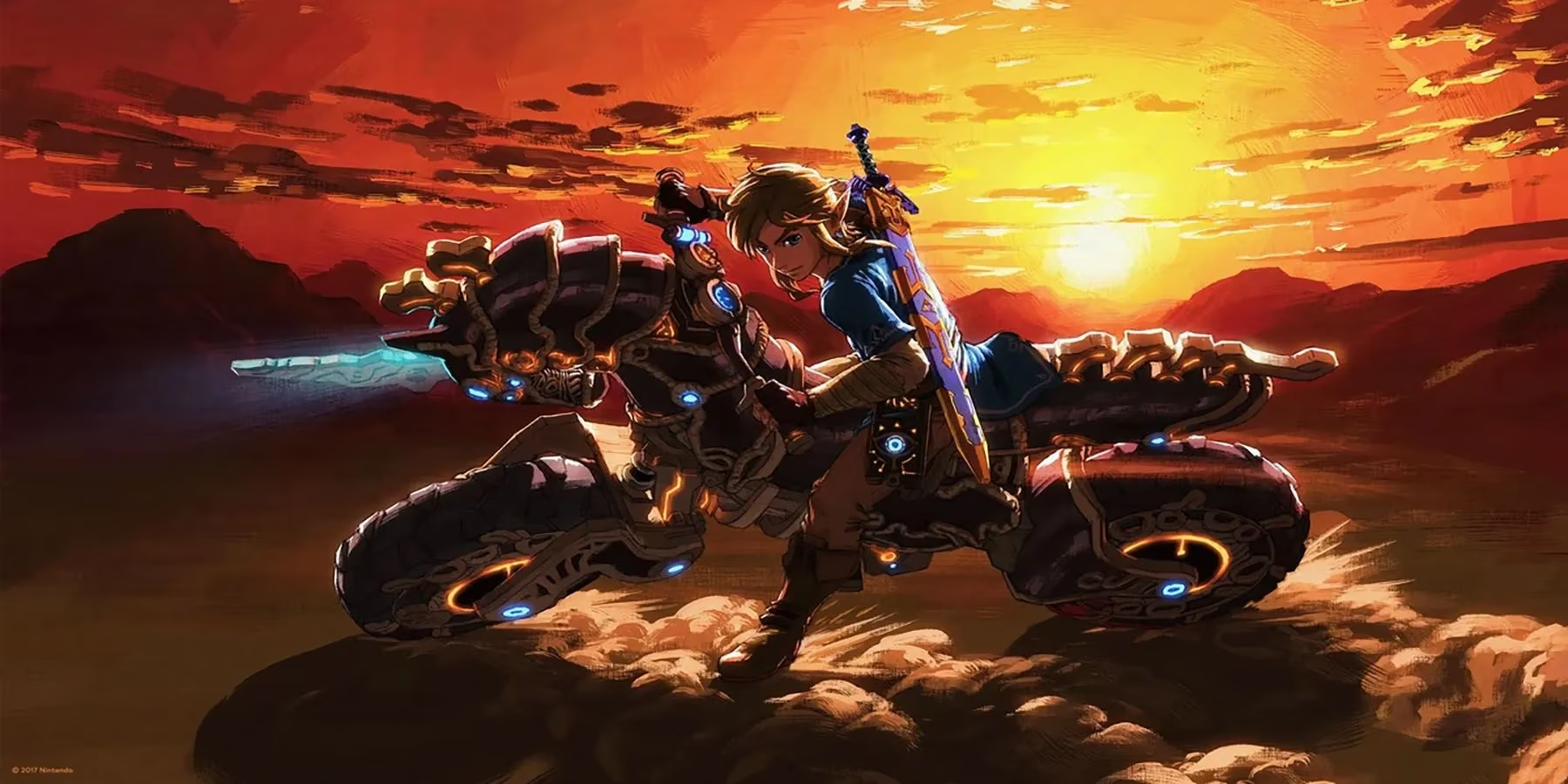
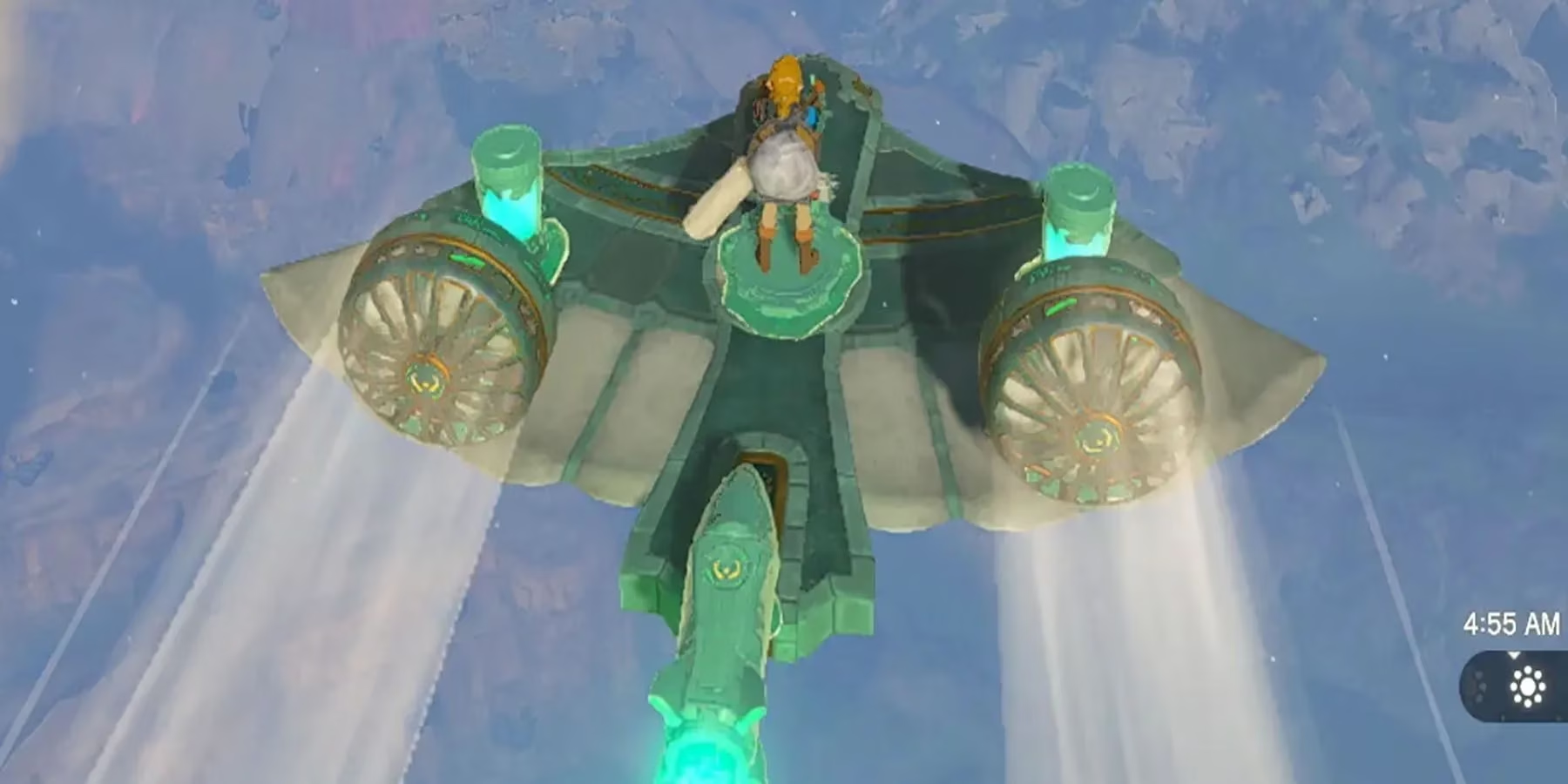
The original Spirit Tracks replaced the vast ocean with a web of iron rails, turning the protagonist into a train conductor appointed by Princess Zelda herself. That shift wasn’t just cosmetic; it redefined traversal and interaction. Now, picture the natural progression from the Sheikah Slate to the Purah Pad, and beyond. In Tears of the Kingdom, we already saw Link zooming across Hyrule on makeshift airships and fused contraptions. A spiritual successor set a hundred years later could fully embrace a new transportation culture—maybe something akin to the motorcycle DLC from Breath of the Wild, but evolved into a full-blown line of customizable vehicles.
Developers could weave together Sheikah ancient tech and Zonai energy cells into everyday tools. Purah’s research wouldn’t stop at a single gadget; her descendant or an aged, yet still peppy, Purah herself could have ushered in an era of portable devices far beyond what we saw in Tears of the Kingdom. This opens the door for gameplay mechanics centered on augmented exploration—drones that scout terrain, modular gliders, or even rail networks (why not bring back trains in a Hyrule that’s already comfortable with Divine Beast-style mecha?)
👴 The Niko Effect: Passing the Torch
One of the most touching details in Spirit Tracks is old Niko, the pirate-turned-storyteller, who fills in the gaps between Phantom Hourglass and the new era. A sequel to Tears of the Kingdom could pull off the same emotional anchor with the ageless Purah. By 2026’s standards, that callback would land like a warm hug. Imagine an elderly, but still brilliant, Purah guiding a new hero, upgrading gadgets, and recounting tales of the Upheaval and the battle against the Demon King.
That narrative device also lets the game preserve continuity while starting with a clean slate. New characters can flourish—descendants of Hudson and Rhondson, a new generation of Zora engineers, or a Gerudo chieftain who references Riju’s lineage. Side quests could feel like mini reunions across time, giving longtime fans subtle rewards without alienating newcomers.
🏰 Rebuilding a Kingdom, Not Just a Map
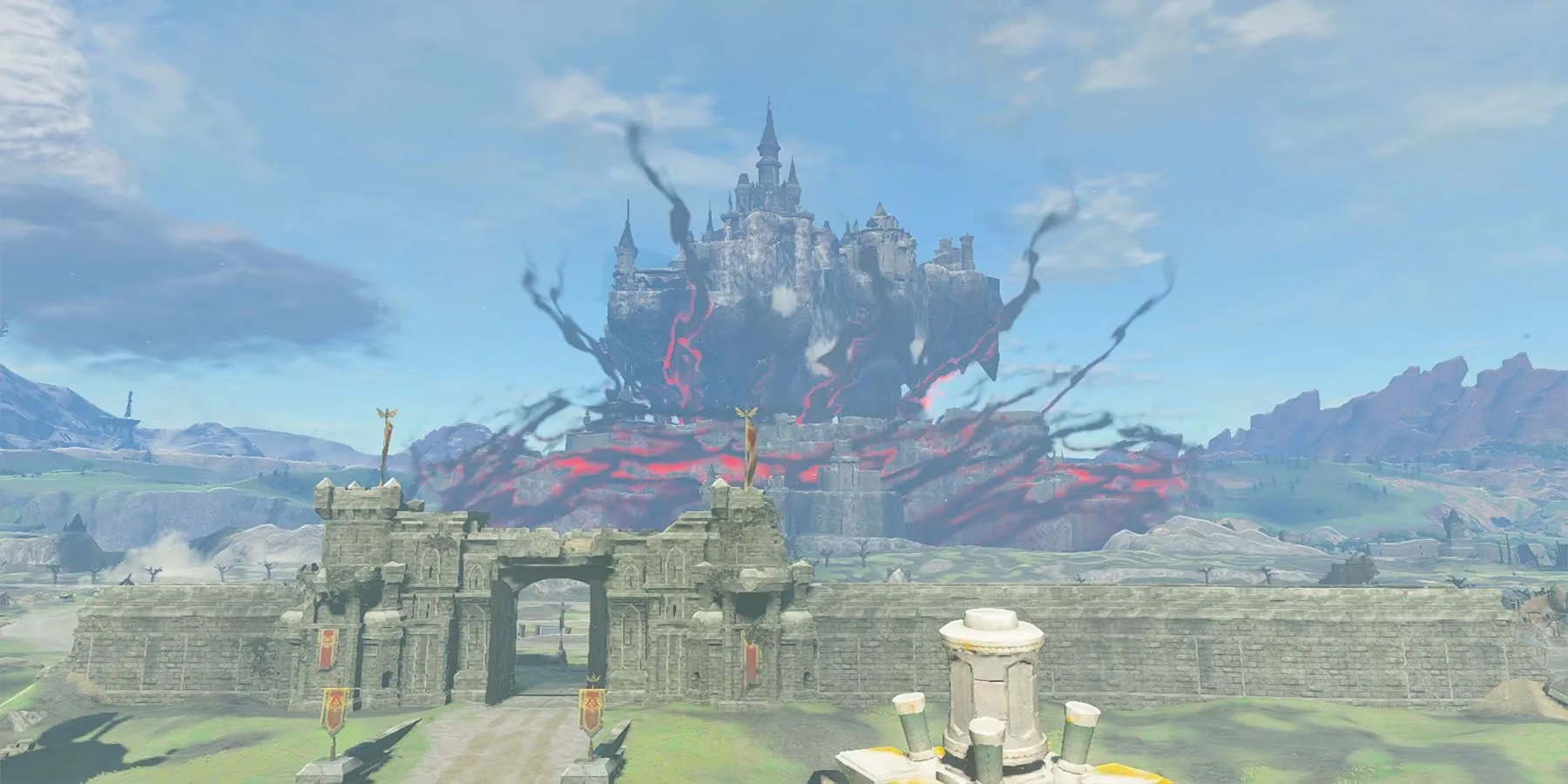
Spirit Tracks introduced a New Hyrule that had grown from the legacy of its founders. Using that template, a Tears of the Kingdom successor could show the fruits of reconstruction. Hyrule Castle wouldn’t just be the battered shell we knew; it might be fully restored, incorporating Zonai motifs and Sheikah tech into its spires. Villages could reflect decades of peace and cooperation—Tarrey Town expanding into a bustling hub, Gerudo Town adopting advanced irrigation systems, and Goron City running on steam-driven smithies.
This setting reuse isn’t lazy; it’s a celebration. Walking through a familiar location that has aged and changed feels like returning to a hometown after years away. The map could theoretically stay the same skeleton, but with enough layers of renovation and new underground or sky areas to make exploration rewarding again.
🔧 Crafting Gets a Modern Twist
Phantom Hourglass and Spirit Tracks leaned heavily on the DS stylus and touch-screen puzzles. In the Switch era, Tears of the Kingdom gave players the Ultrahand and Fuse system—a crafting sandbox that almost felt like a playground. A spiritual successor to TotK could refine that system into a core pillar.
Envision a sequel where crafting isn’t just for puzzles or transportation but integrates with combat, stealth, and storytelling. Blueprints could be shared between players (in a non-intrusive way), and new materials might arise from decades of architectural and ecological change. Maybe the spirits of the old Champions or Sages influence weapon enhancements, or the new hero carries a Purah Pad successor that acts like a fully-fledged multi-tool—perhaps even a wrist-mounted holo-projector that stores schematics.
🌄 The Spirit of Continuity
A direct sequel to Tears of the Kingdom doesn’t have to be a rehash. By taking cues from Spirit Tracks, Nintendo could deliver a tale that honors the epic we lived while pushing into uncharted territory. The pieces are all there: a tradition of century-long gaps, a love for quirky character cameos, and a gameplay loop that begs for evolution. The next Link might not be the one we remember, but with a little help from an old scientist and a lot of heart, this new chapter could feel like coming home—and setting off on a grand new expedition at the same time.
Industry insights are provided by Game Developer, and they help frame why a century-later Tears of the Kingdom successor (in the spirit of Spirit Tracks) could feel fresh without abandoning continuity: long-lived franchises often evolve by turning prior “prototype” mechanics—like Ultrahand vehicles, Zonai energy management, and Purah Pad-style tools—into stable, readable systems that support new traversal networks, crafting-forward combat loops, and a rebuilt Hyrule that meaningfully reflects societal and technological change over time.
Comments