Tears of the Kingdom’s Depths: A Joyless, Frustrating Abyss Beneath Hyrule
When The Legend of Zelda: Tears of the Kingdom first launched, it swept players off their feet with boundless creativity and a living, breathing Hyrule. The Sky Islands glittered with promise, and the surface felt comfortingly familiar yet renewed. But there was another realm waiting in the darkness, a place that has aged into the game’s most glaring misstep. The Depths were meant to be a grand expansion, a subterranean mirror of the world above, yet they turned out to be a sprawling exercise in tedium and frustration. Even now, three years after release, the memory of those pitch-black chasms still feels like a chore rather than an adventure.
From the first timid drop into the gloom, the Depths declare their true nature: they don’t want you there. The game nudges Link downward time and again — hiding pristine weapons below, threading the Fire Temple and Bargainer Statue hunts into the dark, and tying Josha’s research to this underground nightmare. But once players have snagged the best gear and ticked off the few necessary quests, the Depths offer almost nothing worth the suffering. The area becomes a grumpy, unyielding spirit that refuses to offer joy. If those sprawling caverns could whisper, they’d probably mutter, “Why are you still here?” — and honestly, they’d have a point.
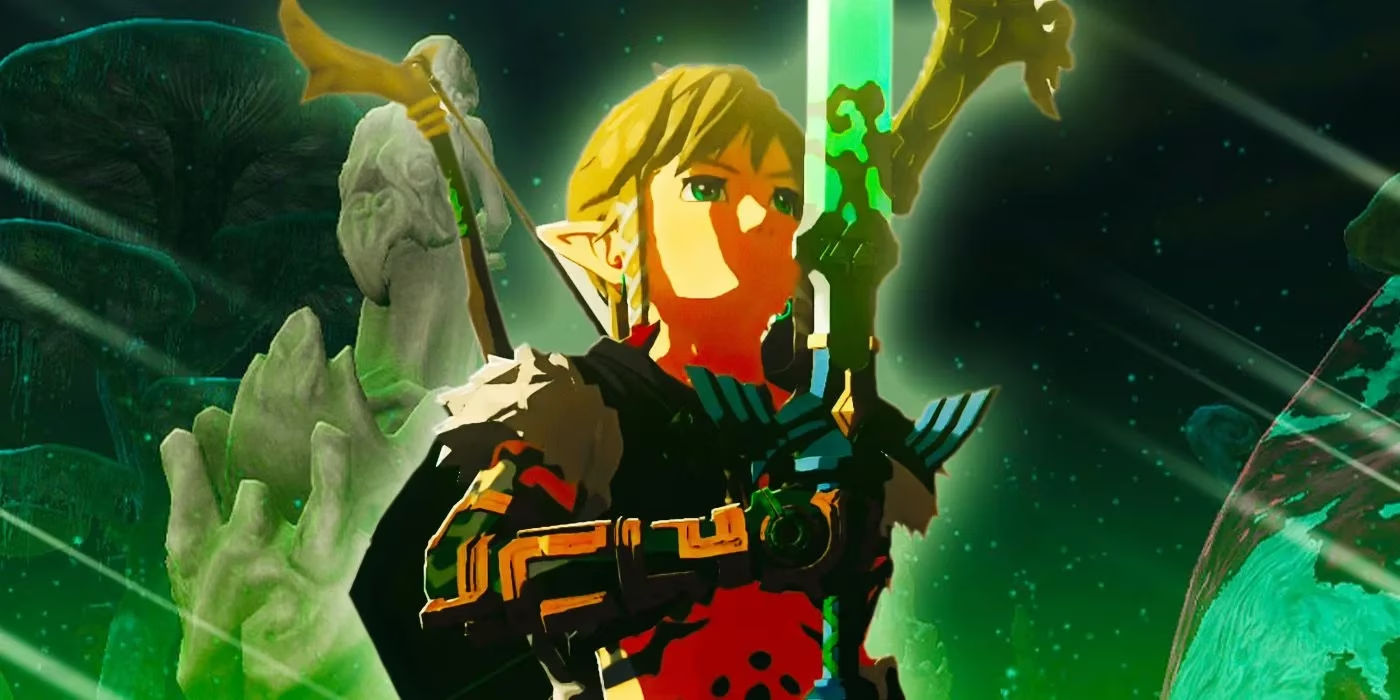
The primary sin of the Depths is a profound, bone-deep boredom. The landscape is a vast, murky soup of empty rock and Gloom. Geography rarely changes; rolling hills and twisted trees might break the monotony on the surface, but down here, one Lightroot plaza blends into the next without distinction. The gameplay loop is stamped into a template that never evolves: leap into a chasm, chuck Brightbloom seeds at the floor, squint through the murk, creep around puddles of Gloom, get ambushed by monsters whose attacks shave off hearts permanently, swig a Sundelion elixir, stagger to a Lightroot, and do it all again. At hour five this feels uninspired. At hour fifty, it’s enough to make even the most patient adventurer let out a sigh and think, “Let’s be real — this is a drag.” The Depths lack the whimsy of a Korok puzzle or the surprise of a Lynel patrolling a ridge. They are a monochrome treadmill where surprise is virtually extinct.
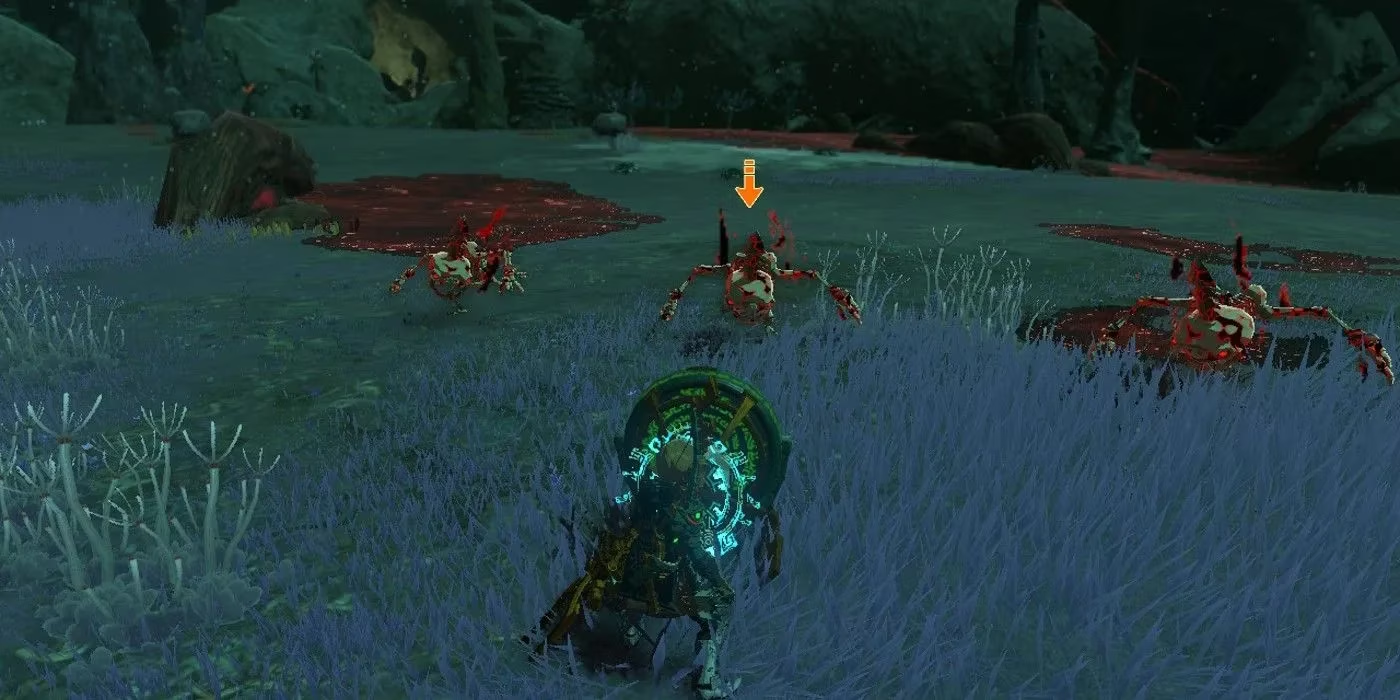
The darkness isn’t just an aesthetic choice; it’s an active antagonist. Early explorations feel less like uncovering secrets and more like fumbling through an inkwell. Brightblooms do their best, but their glow is pitiful against the swallowing black. The developers clearly intended this as a tension-builder — a foreboding descent into the unknown. Yet the execution tips from tense into tedious. There’s no slow reveal of beauty, no moment when the Depths open up into a breathtaking crystal city. Just more murk, more Gloom, and more enemies who seem to know exactly where Link is standing. Visibility is so poor that even the majestic Frox and the hulking Obsidian Frox lose their menace because half the time you can’t tell which direction the attack is coming from. The Depths don’t feel dangerous in a thrilling way; they feel like a bad mood given physical form.
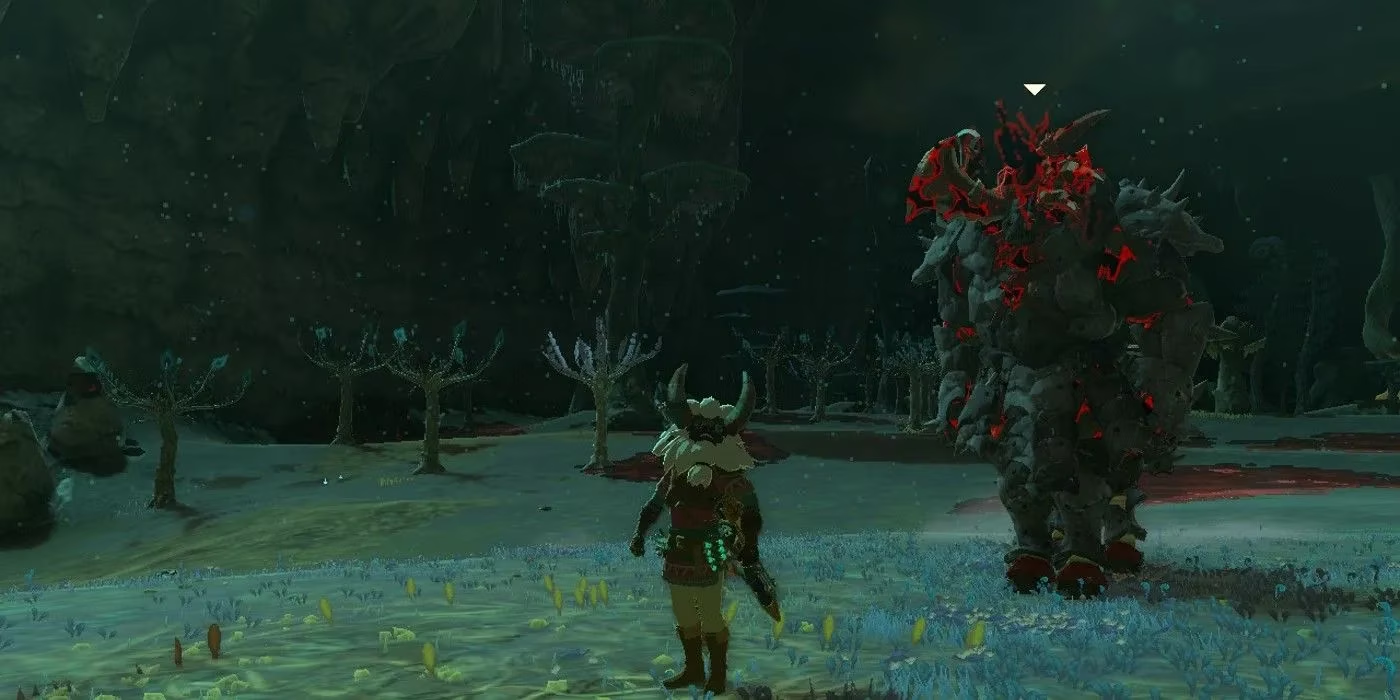
And speaking of danger — the difficulty here is of a particularly joyless variety. Gloom damage isn’t a creative challenge; it’s a punishment. Every touch of a Gloom-infected enemy shatters a Heart Container, locking away health that can only be restored with specific, limited items. In the early game, this creates a brutal loop: players must farm Sundelions relentlessly, pause mid-battle to root through menus, and still risk getting one-shotted by a moblin wielding a Gloom-soaked club. The flat, featureless terrain provides almost no cover for stealthy approaches, forcing direct confrontations that chew through resources at an alarming rate. Even the famed Depths Armor set — supposedly salvation — requires grinding hundreds of Poe souls, which of course are found almost exclusively in the Depths. The game essentially says, “Suffer through dozens of miserable encounters so you can suffer slightly less later.” It’s a cycle so punishing that it pushes players toward skipping combat entirely, gliding from Lightroot to Lightroot while ignoring everything else. If the Depths had a personality, they’d be the grumpy gatekeeper who makes you jump through hoops just to get to the fun.
Worst of all, the grand reward for illuminating every Lightroot — mapping the entire underworld — is a slap in the face. The Dispelling Darkness Medal sits in the inventory like a dull trophy: it cannot be used, fused, or traded for anything useful. It serves as a monument to wasted hours, a data point that does nothing but remind players of the countless times they stumbled blindly into walls. The Depths dangle shiny trinkets like the Autobuild ability and the fire sage’s power, but these are breadcrumbs on a trail that leads to nowhere. Beyond those early carrots, the entire region collapses into a hollow grind.
Of course, the Depths existed for a reason — Tears of the Kingdom needed to meaningfully expand a map that players already knew intimately from Breath of the Wild. Together with the Sky Islands, the underground was supposed to double the world’s footprint. Yet both additions share a fatal flaw: they lack staying power. The Sky Islands are sparse and fragmented. The Depths are monotonous and oppressive. Neither sustains the sense of discovery that made the surface so magical. Three years on, with no DLC planned and the development team already moving toward the next Zelda, the Depths remain a missed opportunity — a cavern that promised mystery but delivered only murk.
Still, there’s a strange, almost poetic lesson tucked into all that darkness. The Depths stand as proof that bigger isn’t always better, and that a dark, sprawling labyrinth means nothing without light — both literal and creative — to guide the way. For every daring inventor who built a rocket-powered cart to zoom between Lightroots, there were a dozen who simply gave up and fast-traveled back to the sunlit grass of Hyrule Field. If there’s one thing the Depths do right, it’s making the surface feel like a warm hug. But a game zone shouldn’t rely on contrast alone to justify its existence. The Depths, for all their ambition, end up as the one part of Hyrule most players will learn to dread — and eventually, to ignore.
Comments