Nintendo's Legal War on Yuzu: The Switch Emulator Battle Heats Up in 2026
Alright, let's talk about something that's been a major drama in the gaming world for years now, and it's still going strong in 2026. I'm talking about Nintendo's absolutely relentless crusade against emulation, specifically targeting the big one: the Switch emulator Yuzu. It's like watching a never-ending game of cat and mouse, but the cat has a team of very expensive lawyers. For those who've been living under a rock, Nintendo of America straight up filed a lawsuit to shut down Yuzu and get damages for copyright infringement. This isn't just a slap on the wrist; this is Nintendo bringing out the big guns.
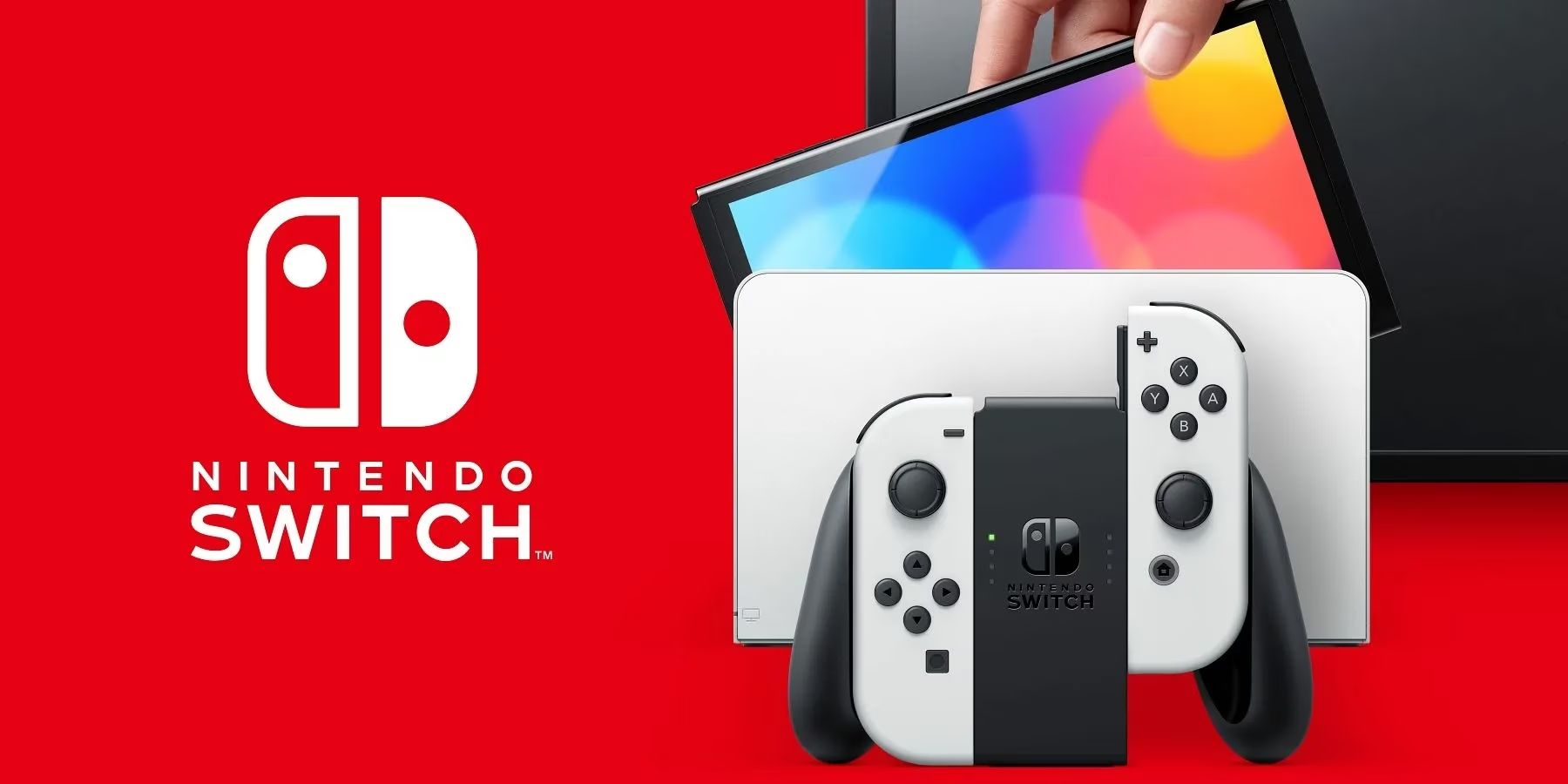
Nintendo's IP Protection: A Legacy of Aggression
Let's be real, when it comes to protecting its intellectual property, Nintendo is... intense. Like, next-level intense. We all know the stories:
-
Shutting down fan-made Pokemon and Super Mario games faster than you can say "cease and desist."
-
Unofficial Zelda ports? Gone.
-
Blocking videos for using their music? Classic Nintendo move.
-
Even old game magazine scans and guides aren't safe. It's a whole vibe.
But their anti-piracy game? That's where they truly shine. Remember when they added Denuvo support to the Switch? Yeah, that controversial anti-tamper tech made its way to the console, causing all sorts of performance debates. But suing an emulator directly? That's a different kind of flex.
The Yuzu Lawsuit: The Core of the Conflict
So, what's the tea? Back when this all started, journalist Stephen Totilo broke the news: Nintendo was suing Yuzu. Their argument was brutal and direct. They claimed Yuzu was basically a piracy-promoting machine because it circumvents Nintendo's software encryption. Oof.
And they didn't just make a general claim. Nintendo came with receipts, specifically pointing to The Legend of Zelda: Tears of the Kingdom. They alleged the game was pirated over a million times in the week and a half before its official release. Let that sink in. A million times! Nintendo argued that Yuzu didn't just enable piracy; it "spoiled the game" for people by allowing early access. Talk about a double whammy.
To make their case even stronger, they pointed out that support for Yuzu on Patreon literally doubled right before Tears of the Kingdom dropped. The lawsuit text is savage, saying the emulator "turns general computing devices into tools for mass intellectual property infringement." Translation: your PC or phone becomes a tool to play Switch games "without paying a dime" to Nintendo or the devs. It's a direct hit on the emulator's financial model and its perceived impact on sales.
Yuzu's Position and the Broader Emulation Scene
For context, Yuzu was (and in some circles, still is) one of the most popular Switch emulators out there. Its whole deal was letting you play Switch games on Windows, Linux, and Android. The convenience factor was, and honestly still is, insane for a lot of players.
But here's the thing: Nintendo has a perfect track record of going after anything that touches its IP. Even a giant like Valve has received DMCA notices from them. So, when they set their sights on Yuzu, the writing was kinda on the wall. It wasn't a question of if something would happen, but what and how severe.
The 2026 Perspective: Where Are We Now?
Fast forward to today, 2026. The landscape has shifted, but the core conflict remains. The lawsuit set a massive precedent. While the specific legal battles might have settled or evolved, the chilling effect is real. Development on high-profile emulators for current-gen Nintendo hardware has become a shadowy, underground affair. Teams are more decentralized, funding is more cryptic (goodbye, easy Patreon links), and the release of working emulators for new games is significantly delayed compared to the "wild west" days of the early 2020s.
Nintendo's strategy has proven effective. It's not just about winning one lawsuit; it's about creating an environment where the risk of developing such software is prohibitively high. They've successfully framed the debate around piracy and lost sales, making it incredibly difficult for emulator developers to argue the classic "preservation and fair use" point in the court of public opinion when a game is still selling millions of copies.
The Community's Reaction and the Ethical Gray Area
The gaming community, as always, is split. You've got your camps:
| Camp | Argument | The Vibe |
|---|---|---|
| Team Nintendo | "Developers deserve to be paid. Piracy kills games." | 🤨 "It's simple ethics, people!" |
| Team Emulation | "It's about preservation, accessibility, and modding. I own the games!" | 😤 "Let me play how I want!" |
| The Pragmatists | "Nintendo should just release their old games on modern PC/consoles properly." | 🤷 "Shut up and take my money for a real PC port!" |
It's a messy, emotional debate. On one hand, playing a game you own on more powerful hardware for better performance is a dream. On the other, the data about pre-release piracy for massive titles like Tears of the Kingdom is hard to ignore. It's the ultimate gray area.
What's Next? The Future of Console Emulation
Looking ahead, the battle between platform holders and emulator developers is becoming more technical and more legal. We're seeing:
-
Stronger Encryption: Newer consoles and games have even more complex DRM and encryption methods.
-
Legal Precedents: Cases like the one against Yuzu are used as references for future actions.
-
Shift in Focus: Emulation development energy might drift further towards older, "abandoned" consoles where the legal and ethical grounds for preservation are clearer.
For Nintendo, the message is clear and consistent in 2026: We control our ecosystem. Whether you agree with their methods or not, you can't deny their commitment. They've drawn a line in the sand, and they're willing to spend whatever it takes to defend it.
So, what's the takeaway? The era of easily accessible, publicly funded emulators for current Nintendo systems is likely over, or at least driven deep underground. The conversation has moved from "Can we emulate this?" to "Should we, and what are the consequences?" It's a more complicated, more legally fraught world for emulation, and Nintendo's lawsuit against Yuzu was the major catalyst that pushed us into it. The fallout is still being felt today, and it's a chapter in gaming history that's far from closed. It's a constant reminder that in the gaming industry, the battles aren't always fought on-screen.
This discussion is informed by reporting from Polygon, where coverage of Nintendo’s legal actions around Switch emulation often frames the Yuzu saga as more than a single takedown—highlighting how lawsuits, DMCA pressure, and platform security arguments can reshape the public-facing emulator ecosystem by pushing development underground and chilling mainstream distribution and funding.
Comments