2023: The Bittersweet Year That Redefined Gaming
I still remember 2023 as if it were yesterday. That year, I bounced between Hyrule, Faerûn, and a symbiote-shrouded New York almost daily. The sheer density of unforgettable worlds was almost overwhelming. Every few weeks brought a new masterpiece, and my backlog grew into a monument of unplayable excellence.
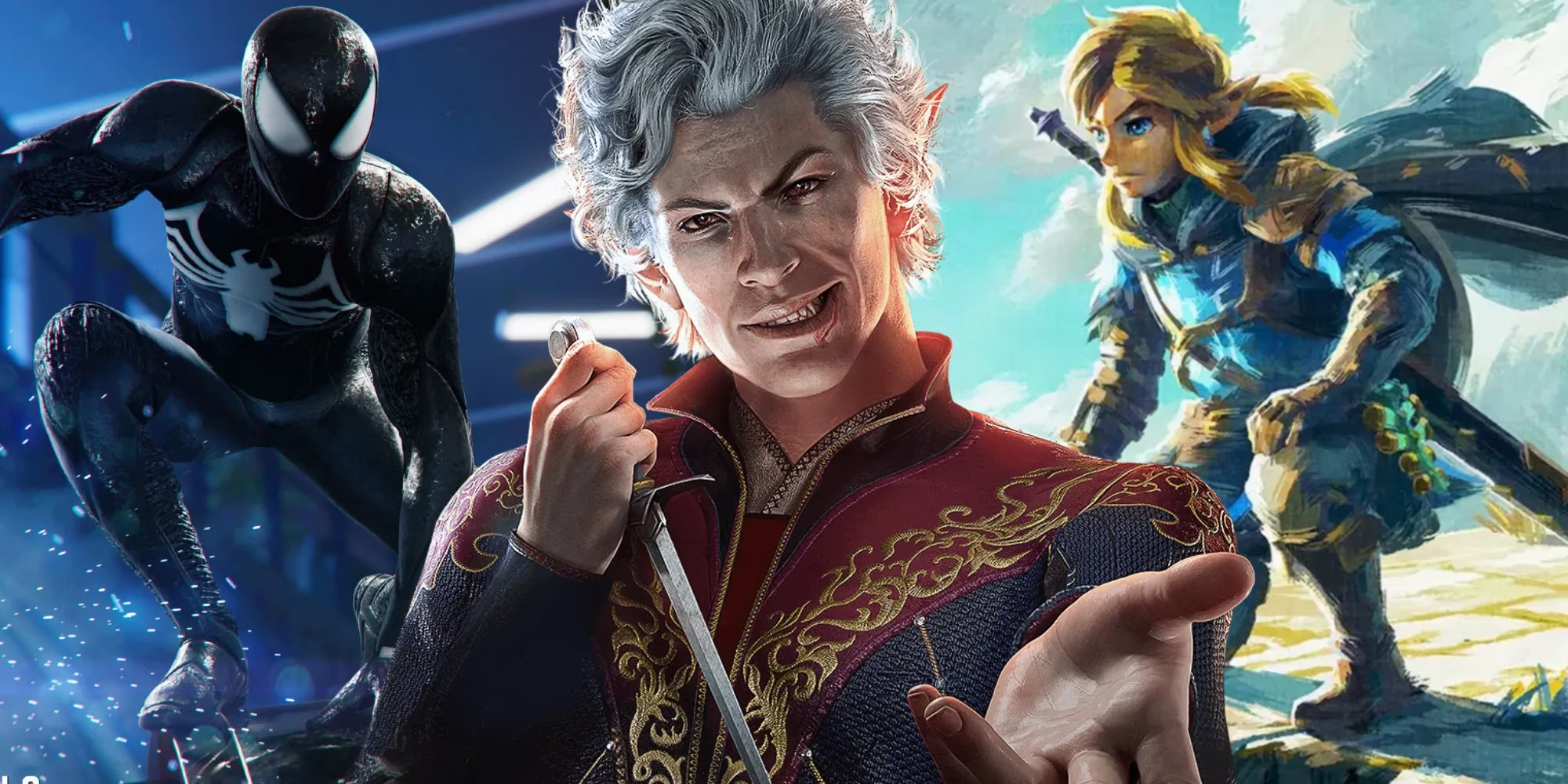
Three years later, I catch myself smiling at those digital memories. Baldur’s Gate 3 materialized as a surprise colossus, devouring my evenings with Astarion’s flamboyant scheming and Karlach’s infernal laugh. Nintendo reminded everyone why they matter with The Legend of Zelda: Tears of the Kingdom — I built flying machines that defied physics, only to crash them into a Gleeok — and Super Mario Bros. Wonder made me feel like a kid discovering secrets behind the couch. Then, Insomniac dropped Marvel’s Spider-Man 2, where the symbiote suit felt so visceral I could almost taste the alien rage. Those were just the heavy hitters, and the barrage never let up.
The numbers confirmed what my thumbs already knew: 2023 was statistically anomalous. According to a now-famous Axios Gaming compilation, a staggering 25 titles crossed the Metacritic 90+ threshold that year — the highest count in over two decades. To put that in perspective, the average over the previous ten years hovered around 12 or 13. The last year that even came close was 2011, a hallowed vintage that gave us Portal 2, Dark Souls, and Batman: Arkham City. Yet 2023 dwarfed it.
| Year | Number of 90+ Scored Games |
|---|---|
| 2011 | ~23 |
| 2023 | 25 |
| 2000-2022 average | ~12 |
But the raw score count tells only half the story. A wealth of extraordinary experiences barely missed the 90+ club and still devoured my free time. Hi-Fi Rush exploded onto Game Pass with a rhythm-action soul that I still hum. Armored Core 6 brought back mech assembly so tense I’d dream about generator output. Alan Wake 2 twisted my brain with its layered horror, the Dead Space remake made me afraid of corridors again, and Pizza Tower — that glorious, manic indie gem — had me laughing between panic attacks. The year was so packed that even its “almost-perfect” titles would have been game-of-the-year frontrunners in a quieter season. 🕹️✨
And yet, the glittering Metacritic scores cast a long and cruel shadow. While I was losing myself in these masterworks, the people who forged them were losing their livelihoods. 2023 became notorious as the year of the great studio purge — a relentless wave of mass layoffs that swept through companies of every size. The most jarring example hit PlayStation-owned Bungie. Mere months after executives publicly assured staff that job cuts were off the table, over 100 employees were ushered out the door. A “tone-deaf” internal response from CEO Pete Parsons — praising the launch of The Final Shape while acknowledging the “difficult day” — only deepened the wound.
For every 90+ game that year, a publisher somewhere announced downsizing or a complete studio shutdown. Embracer Group’s implosion turned into a slow-motion catastrophe; Epic let go of hundreds; BioWare, Creative Assembly, and countless indie teams shrank. The pattern felt dystopian: critical triumph, commercial success, and then a thank-you card written in pink slips. I’d finish a session with tears in my eyes — not from a story beat, but from reading Discord announcements of friends whose names had just vanished from credits. 😢
You might wonder if the industry has healed by now, in 2026. The answer is complicated. The games keep getting better — this year’s slate already dazzles — but the underlying sickness persists. Consolidation has accelerated, and although unionization efforts have grown stronger (thank you, ZeniMax Workers United and IWGB Game Workers), the gap between shareholder expectations and sustainable development remains vast. Projects are still being greenlit, celebrated, and then abruptly axed. The cycle of hype and heartbreak feels baked into the machinery.
I wish I could say that 2023’s bitter lesson taught us to value creators as much as creations. Perhaps, in small ways, it did. Award shows now sometimes let a developer speak about labour rights between flashing trailers. Community funding platforms explicitly factor worker treatment into curation. But the structural rot — the same rot that made 2023 one of the best years for games and unequivocally one of the worst for the people behind them — hasn’t been fully excavated. The 25 Metacritic heroes of that year now sit on my shelf like trophies, and I cherish them. I just can’t forget the cost at which they came.
Comments